Monday, September 24, 2007
Next pick
In case there's any confusion, because of the swapping, about who picks next, it's DW (getting back to our original order). Dazzle us, hon.


Friday, September 21, 2007
Today’s random advice: a good time
My brother has been rating movies on the Netflix site, so we occasionally watch films that get recommended to him there. For some time he has noticed that a movie called “Once Upon a time in China 2” keeps coming up. He was a bit put off by the “2”, but finally added it to our selections. It was worth it. Not that I seen so many, but this is certainly one of the best of the Hong Kong “kung-fu” movies I’ve watched. It either transcends or perfects (I’m not sure which) its B-movie genera by using a more-or-less real historical setting, keeping its comedy just this side of slapstick, using that comedy to steer clear of hammy melodrama, and limiting the number and duration of the fights so that the big set piece dance number, err fight scene, in the temple doesn’t lose any of its manic wow.
Among other good-natured barbs, the film has continuous easy-going jabs at all sorts of religion—a large cross gets used as a battle axe—but particularly at religious fanatics that structure their political violence on a set of stupid beliefs about what their gods will do for them.
Oh, and unlike some “kung-fu” movies, this DVD comes with its original Cantonese soundtrack. Could there be a more beautiful language?
Saturday, September 15, 2007
Kubrickian?

I was thinking of the Kubrick films I've seen — 2001, Clockwork Orange, The Shining, Eyes Wide Shut, AI, Full Metal Jacket, Lolita — and I was having a hard time thinking of the "Kubrickian" threads in them. I would not guess, if I didn't know already, that the same director made all these films (although I would guess that Spielberg had a hand in AI just from the way it looked and the subject matter). It's interesting to me how some directors have a very bold signature — like you can spot a Woody Allen film from a mile away (urban, angst-ridden, intellectual, silly, self-gazing), and others are harder to identify. Do you see a particular aesthetic in Kubrick's films or a commonality of theme/subject matter? (Now that I think about it more, they all do seem to involve people in extreme situations ... futuristic societies, isolated hotel, war, bizarre sexual situations ... and maybe notions of how society tends to be at odds with human nature and how society seems prone to moving in absurd directions).
Wednesday, September 12, 2007
Failsafe
Have any of you seen “Failsafe”? It was made at the same time as “Dr. Strangelove” but seems to be much less known today. Not a comedy, it is nevertheless an odd take on nuclear war. Walter Matthau has a great role as the academic adviser to the president.
It’s a good movie for the compare-and-contrast exercise.
It’s a good movie for the compare-and-contrast exercise.
Model Airplanes
We have another movie with special effects created by having a foreground object or actor imposed on a background scene that was shot separately. As kc pointed out, this was rather charming in “The Lavender Hill Mob”. But do you think it works here?
The interior of their B-52 was realistic, and I liked the background view of flying when it was out the window. But I think they should have skipped all the exterior shots of the plane since it just looked like the small model that it was and didn’t move in conjunction with the background. Getting damaged by the missile blast wasn’t impressive either. I think it would have been more intense and tightly focused to have done only interior shots. This might be true even if the U.S. Air force had allowed the use of a B-52 which they never would for a critical movie like this.
The interior of their B-52 was realistic, and I liked the background view of flying when it was out the window. But I think they should have skipped all the exterior shots of the plane since it just looked like the small model that it was and didn’t move in conjunction with the background. Getting damaged by the missile blast wasn’t impressive either. I think it would have been more intense and tightly focused to have done only interior shots. This might be true even if the U.S. Air force had allowed the use of a B-52 which they never would for a critical movie like this.
Monday, September 10, 2007
Alien hand syndrome
 What do you think of Dr. Strangelove being in a wheelchair and having an alien hand? Wikipedia says “Strangelove’s appearance echoes the movie villains of the Fritz Lang era in 1920s Germany, in which sinister characters were often portrayed as having some disability.”
And why is he able to walk at the end?
T.J. Kong
 The role of T.J. Kong was originally written for John Wayne, but the studio insisted that Sellers play four roles, so the part was given to Sellers. But Sellers sprained his ankle during filming, and was unable to get around in the crowded B-52 cockpit set. So they asked John Wayne to play the role, and he turned it down. Then they asked Slim Pickens.
Pickens had never been outside the U.S. before the filming of Dr. Strangelove, so he had to get a passport in order to get to the filming in England. When he first got to the set, people thought he had dressed for the part -- but that’s how he always dressed, with a cowboy hat and fringed jacket and cowboy boots. And people also thought that he was trying to stay in character between takes and before and after filming, but that’s just because he wasn’t playing a character -- he was just being himself.
What did you think of Pickens as Kong?
Peter Sellers
 Were you impressed by Seller’s three roles? I thought he was great, especially when you consider that many of his lines, if not most, were improvised. Kubrick was so pleased with the ad libs that he had them transcribed and put into a post-filming version of the script. He also improvised the Nazi salute -- it was not called for in the original script.
I really enjoyed his three accents -- the upper-class English, the flat midwestern, and the Austrian (which was supposed to approximate German). He also learned a Texas accent for the role of T.J. Kong, which he was originally supposed to play.
The President role was originally played comically, but Kubrick finally insisted that Sellers play it seriously. I think that was a really good change.
Sex
What’s with all the sex in this movie? With a little help from Wikipedia and IMDB, I’ve compiled this list of sexual innuendo:
--The opening scene of the mid-air refueling set to the song “Try a little tenderness”
--Jack Ripper and his “precious bodily fluids” and his “essence” that he denies to women
--Lionel Mandrake’s name (the Mandrake plant is thought to be an aphrodisiac)
--Buck Turgidson’s name
--Buck Turgidson’s secretary (who happens to be the centerfold that T.J. Kong looks at) and her relationship with Buck
--President Merkin Muffley’s name (a merkin is a pubic wig, and muff is slang for pubic hair, of course)
--Soviet Ambassador Alexei de Sadesky’s name (a reference to the Marquis de Sade)
--Dr. Strangelove’s name
--Dr. Strangelove’s apparent arousal at the thought of nuclear war
--Dr. Strangelove’s alien hand masturbating
--Dr. Strangelove’s suggestion of a polygynous society underground
--T.J. Kong straddling the phallic bomb
And I’m sure more could be found. Is this just supposed to be funny, or is there some statement being made about war and sex?
Rating
Those of us who had seen the film before all had given it a 9 on Film Affinity. After watching it again, do you still think it deserves a 9? I revised my rating downward.
I don’t want to exclude you, cl, so please tell us what rating you think it deserves even though you’re only on your first viewing.
I don’t want to exclude you, cl, so please tell us what rating you think it deserves even though you’re only on your first viewing.
Christy's pick

We haven't done Hitchcock yet, so here's an enjoyable early film from the master of suspense.
Thursday, September 06, 2007
Best title
Ugetsu has the most beautiful title ever: "Tales of a Pale and Mysterious Moon After the Rain." I love how evocative that is. Another Japanese title I really adore is "The Sailor Who fell From Grace WIth the Sea." I've only read the novel by Yukio Mishima; I have not seen the movie with — egads! — Kris Kristofferson. Has anyone seen it? I am also very intrigued by the title of this new Brad Pitt movie "The Assassination of Jesse James by the Coward Robert Ford." Are any film titles especially meaningful or poetic to you?
Thursday, August 30, 2007
Visual Style
From commentary I’ve gathered that during the 30s Mizoguchi adhered rather strictly to a formal set of rules about filmmaking. One of these was to film each scene in a single shot. While that would have some clear advantages, it would also leave you at risk of creating a ponderous and sluggish movie. The task would be all the harder since they didn’t have zoom lens back then.
By the time of our movie, Mizoguchi had relaxed on his rules and expanded his camera toolkit. So while he still did mostly long takes and avoided close-ups and cut-away reaction shots, he was using cuts as internal punctuation in scenes.
What do you think of the visual style of this movie? And besides the camera work, what about the visual details? One thing I noticed is that we are not shown battle scenes between the armies. We see the fighters frequently, but mostly we see them looting and scrounging for food.
Wednesday, August 29, 2007
Ben’s pick

Our next movie will be Dr. Strangelove or: How I Learned to Stop Worrying and Love the Bomb. Several of us have rated it on Film Affinity, but we all gave it a nine, so I’m hoping that none of you will mind seeing it again.
A Rather Off Topic Question
I’ve a question about a magic castle. That is perhaps only a weak link to our present movie, but my question really picks up on kc’s question about the action effects in “The Lavender Hill Mob”. Has anybody seen Cocteau’s 1946 movie, “Beauty and the Beast”? Cocteau had some association with the Surrealists and in the magic castle in BB he said that he didn’t want to do “movie” special effects but instead wanted concrete surreal images. If you’ve seen the movie, what do you think of the effects?
Mizoguchi as a Social Critic
Mizoguchi made quite a few movies in his life. The only other one I’ve seen is “Sansho the Bailiff” which was made a year after our film. It is a good film, but is rather rambling and doesn’t have quite the impact of the tightly focused and integrated “Ugetsu”. For at least a few years when he was younger, he moved in leftist circles and made at least one movie that offended the authorities. He is known for movies that focus on women and their suffering. On the other hand, at least in his latter years, he seemed to support traditional gender roles and, for instance, didn’t want women as filmmakers.
If you wanted to draw some broader conclusions from our movie, one would be that Mizoguchi is showing that women suffer worse in war. But do you think he draws our attention to the role the structure of society plays in this? I suspect that in his other films he generally doesn’t, but I would very much like to see more of them and find out.
If you wanted to draw some broader conclusions from our movie, one would be that Mizoguchi is showing that women suffer worse in war. But do you think he draws our attention to the role the structure of society plays in this? I suspect that in his other films he generally doesn’t, but I would very much like to see more of them and find out.
Tuesday, August 28, 2007
Next pick
OK, the next pick goes to Ben, then. We are back to our alphabetical order — for now. Sara and Amys, if you want to jump in with a pick, though, just say the word. The more the merrier.
A Commercial Consideration?
Mizoguchi reportedly wanted to have Tobei coldly and cynically advance his military career and forget about his suffering wife. But the studio baulked at the idea and talked Mizoguchi into having the two reconcile.
Since it was never made, we can have little idea how good Mizoguchi’s version would have been. But I have my doubts. There is that good scene in the brothel where, right before he finds his wife, Tobei is boasting about his skills and knowledge in warcraft. He namedrops many famous writers who he has never read, and he offers up as deep wisdom the shallowest ideas. Clearly this man would soon crash and burn in a culture of proudly professional warriors. Also, by having Tobei go back home with his wife, there is a more resonate parallel between the two couples, and particularly between the two men and what they have learned about themselves and their world.
Since it was never made, we can have little idea how good Mizoguchi’s version would have been. But I have my doubts. There is that good scene in the brothel where, right before he finds his wife, Tobei is boasting about his skills and knowledge in warcraft. He namedrops many famous writers who he has never read, and he offers up as deep wisdom the shallowest ideas. Clearly this man would soon crash and burn in a culture of proudly professional warriors. Also, by having Tobei go back home with his wife, there is a more resonate parallel between the two couples, and particularly between the two men and what they have learned about themselves and their world.
Ghosts?
Have you listened to the commentary track by Tony Rayns? He suggests that instead of ghosts, Lady Wakasa and her servant are delusions that Genjuro has during a spell of madness. I had that same idea the first time I saw the film right at the scene where Lady Wakasa’s father’s helmet starts chanting. But I like that Mizoguchi doesn’t force our hand and allows us to see the Lady Wakasa interlude as either supernatural or madness.
Likewise, that wonderful scene with the boat in the fog is the most ghostly in the whole movie. But the other boat that appears out of the gloom carries a wounded man who takes a drink and then dies—not a ghost at all.
Likewise, that wonderful scene with the boat in the fog is the most ghostly in the whole movie. But the other boat that appears out of the gloom carries a wounded man who takes a drink and then dies—not a ghost at all.
Monday, August 27, 2007
A little gem
This has nothing to do with our current discussion, but if you are ever in the mood for a fascinating, charming documentary, check out "Who the Fuck is Jackson Pollock?" It's about a lady truckdriver who bought a painting for $5 at a thrift shop that some people think is an original Jackson Pollock worth about $50 million. Most of the show is about how absurd the art world is. It's really, really delightful.
The Characters
The movie has four characters that we follow with differing degrees of attention. What do you think of the characters and the balance between them?
Ugetsu
Why don’t we start our discussion of “Ugetsu” with the broad what-did-you-think-of-the-movie question?
A few things that might be worth considering as background:
This movie came out in 1953 just after the restrictions of the U.S. occupation had been lifted. And prior to the American controls, the Japanese military government had long controlled the content of film. So there was a new freedom at this time. But there were also new commercial pressures. Mizoguchi was at a big studio that was releasing a feature film a week. Other studios were as well. And there were imports.
“Ugetsu” was made near the end of Mizoguchi’s long career. I gather that he had explored quite a few different styles of filmmaking over the years.
Japanese filmmakers were having some success internationally with movies that had historical settings, for instance, Kurosawa, but films set in contemporary Japan, such as those of Ozu, were not watched much abroad.
Saturday, August 25, 2007
Next pick
We'll start discussing DW's pick on Monday! Sara, you should announce the next pick then (if you are so inclined!).
Friday, August 24, 2007
Has anyone seen ... ?
Before we leave the subject of British films, has anyone seen any movies by director Shane Meadows? I actually wanted to pick "This is England" from him, but I noticed it wasn't on Netflix, and then "Lavender Hill Mob" caught my eye. Meadows sounds really interesting, particularly the "This is England" film, which is about a little kid who is befriended by some skinheads. He also did "A Room for Romeo Brass" (about the friendship of two young boys) and "Dead Man's Shoes" (about a soldier seeking revenge on some guys who brutalized his brother). He has other films, but those are the ones I've heard of. Has anyone seen? If so, what did you think?
Tuesday, August 21, 2007
Best movie I've seen this summer:
Have any of you seen the 2000 movie “Yi Yi”? It was from by Edward Yang, another filmmaker who died this summer.
“Yi Yi” is his only film I’ve seen, and I was very impressed. This movie shows a fine mastery of the “long-shot, long-take” form and uses frequent framing that is well matched to that style: many scenes with reflections through glass. Yang has outstanding casting including a couple of kids in their first film. By gracefully maintaining parallel perspectives, he gives a portrait of a family. And he provides everything you would ever need out of flashbacks without ever leaving the present. In fact, it is better than flashback because it preserves the crucial feature that memory is of the past and not the present. Very cool.
Unfortunately, this is the only Yang film that Criterion has released. I haven’t yet looked to see if any of his earlier work is available elsewhere.
Tuesday, August 14, 2007
How effective?
I found the motion effects really charming, because they were so amateur by our standards: running down the Eiffel tower (they just looked like they were running in place), the nausea at the end, the car chases with people bouncing up and down while scenery moved around them, the unspectacular, Keystone-coplike crashes. I wonder if that was considered well done in its time. I saw part of "Jaws" recently and was shocked to see how fake it all looked. And that was from the '70s. It makes me wonder whether motion effects that we consider really realistic today are going to be laughable in 20 years. Or do you think big-budget filmdom has pretty much mastered the special effect?
Does anyone have a guess on what the first film was to use the device of newspaper headlines?
Does anyone have a guess on what the first film was to use the device of newspaper headlines?
Monday, August 13, 2007
Merry men

One thing I find really enchanting about heist movies, as opposed to other crime movies, is that the audience is almost always intended to thoroughly identify with and root for the thieves (I suppose there is a British tradition of this way back to Robin Hood), who are generally good-natured and well-meaning in their own ways. We hope they succeed and get away with the crime. Part of the impulse is that they have to be really smart to succeed, and audiences always appreciate and want to identify with a smart "anti-hero." The cops in these movies are usually sort of bumbling and not really well-matched to their foes, although they sometimes get their man. And there's usually some unforeseen glitch (like the gold statuettes falling into the hands of a recalcitrant British brat).
Do you have any thoughts on this as a heist film, particularly a comic heist film?
Interesting ranking

On the British Film Institute Web site (a selection of the favourite British films of the 20th century), LHM comes in at No. 17. While I enjoyed the movie and I am dubious of all ranking systems, I found it puzzling that this film would crack the Top 20. I need to read more about it to get more context, to see what is so special about it, but in the meantime, do you have any thoughts on that ranking? Do you have a favorite British film?
A Ghost Story, Perhaps?

Criterion should be applauded twice. First, they are bringing back important films that are otherwise unavailable, and second, they do their transfers to DVD with the highest standards and the greatest care. A wonderful example is their edition of Mizoguchi’s “Ugetsu” which is deserving on both accounts.
This movie shows a smooth mastery of every facet of filmmaking. Mizoguchi pays close attention to endless details, but it is all on behalf of his well integrated and multi-layered story. If you are half as taken with this film as I am, you will want to watch it at least once more.
This movie shows a smooth mastery of every facet of filmmaking. Mizoguchi pays close attention to endless details, but it is all on behalf of his well integrated and multi-layered story. If you are half as taken with this film as I am, you will want to watch it at least once more.
Monday, August 06, 2007
Keeping busy
One thing I've really liked about the Almodovar films we've watched is the pace. Everything feels so hectic. All these life-changing, usually pretty damn depressing things are happening to people, but there's always so much other zany shit going on (Muslim hijackers, spiked gazpacho, insane wives, frantically feeding film crews, moms coming back from the dead) that the bleak points — gut-wrenching breakups, sexual assaults — don't get a chance to be truly bleak. No sooner does the girl stab her stepfather to death than the mom is in there — in a comic nod to professional housewifery — with her bucket and mop expertly dealing with the mess, and I for one was thinking boy, that scarlet pool of blood looks really pretty on that aquamarine floor. Almodovar makes "dark" comedies, but the darkness is always kept at bay by the manic carnival and color of life.
La madre muerta
Did you at any point believe the mom was actually dead? Did you think there'd be an explanation that was not supernatural?
Wednesday, August 01, 2007
Kim's pick
This is a British classic that I've heard about forever but have never seen — with the great Alec Guinness (plus a cameo by a very young Audrey Hepburn).


Tuesday, July 31, 2007
Leading ladies
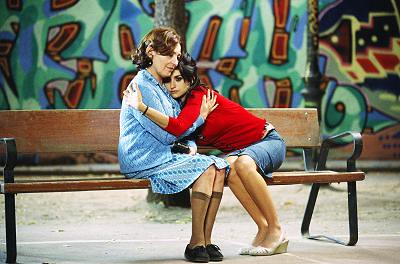 What did you think of Penelope Cruz as the heroine? I didn't mind her, but I think she lacked that real spark that was so fantastic in Pepa in "Women on the Verge." And I think Carmen Maura stole all her scenes in "Volver," too. I adored her hiding under the bed and laughing about farts.
Funny
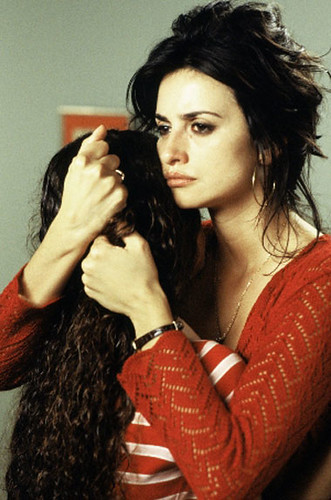 "Volver" was categorized as a comedy everywhere I looked, and it certainly had its amusing moments. But the inclusion of the rapist stepfather and incestuous grandfather gave me pause. I was not expecting that sort of thing, and I found it somewhat difficult to keep it from distracting from the rest of the movie. Your thoughts?
The wind
 What was the significance of the east wind? And the wind turbines? KC made the comment that perhaps they were a Don Quixote reference. I've since read that "Volver" was set in La Mancha. Do you see any connection?
The sexes
 "Volver" gives us an ensemble of females to root for and a couple of low-life males to despise (one unseen). What do you think Almodovar's thoughts are about men and women? This is only my second film of his, but I'm reminded somewhat of the women and men in "Women on the Verge," who didn't exactly make beautiful music together.
Wednesday, July 18, 2007
Erin's pick: "Volver"
 Let's revisit Pedro Almodovar, shall we? This looks like an interesting storyline.
Tuesday, July 17, 2007
second opinions
Selected critic comments for "Sheila":
Since I'm told that (Stephen) Sondheim and (Anthony) Perkins are serious game people, I assume that the plot, if run backward, would make sense. More important to me was the generally festive air in which all this genteel mayhem takes place, as well as the rather charming, Agatha Christie manners that are observed. As plot points are explained, people get themselves drinks from the bar. If someone is murdered, the pall of gloom lasts for a maximum of five minutes. -- Vincent Canby, The New York Times
The movie was written by Stephen Sondheim and Anthony Perkins, and they exhibit a very fine eye for showbiz behavior and dialog. They've also played a sort of Jacqueline Susann guessing game for us; we can have fun wondering who the bitchy agent (Dyan Cannon) was inspired by, or the down-at-his luck director (James Mason), or the sexpot (Raquel Welch, who may very well have been inspired by herself). -- Roger Ebert
The Last Of Sheila's chief failing lies in its overemphasis on tricky construction, which gets in the way of its lightly bitchy '70s Hollywood exposé. The Sheila DVD release is invaluable because it adds a gossipy commentary track by Benjamin and Cannon, with drop-in comments by Welch (recorded separately). All were A-list actors when they starred in Sheila, and hearing them reminisce about socializing on the set in the south of France provides an open window onto the slick, professional side of '70s show business that Sondheim and Perkins are skewering. It's diverting as nostalgia and as middlebrow drama. -- Noel Howard, The A.V. Club
superfly!
Some fans tune into "Sheila" for its over-the-top costumes, designed by Joel Schumacher, who went on to direct a lot of bad movies, among them "Batman & Robin." (Would "The Incredible Shrinking Woman" be to his credit or discredit?) Anyway, while Dyan Cannon ran around in a few amusing frocks, like that multi-colored knit jacket she wore the first night of the game, I thought the men were far more fashion-forward. How about Clinton in his tight white jeans and blue-and-white-striped shirt? With the little scarf around his neck? Very natty. Anthony wore a series of curious shirts and open-collared vests.
And I began to suspect Tom was the murderer once he donned that expensive leather jacket. I don't know why. Something in that big, flared collar said "killer" to me.
And I began to suspect Tom was the murderer once he donned that expensive leather jacket. I don't know why. Something in that big, flared collar said "killer" to me.
Lee -- homely?
I can't find a good photo of Joan Hackett for this post.
Various descriptions of "The Last of Sheila" paint Joan Hackett as a Plain Jane (via Wikipedia, she is called a "homely wife"). I found that incomprehensible -- I thought she was the loveliest of the three women. She isn't a flashy beauty like Raquel Welch, but she had a certain class and breeding to her. As such it seemed improbable that Lee would tell Christine she was "trying to hold on to a husband" or that said husband wanted to murder her. Or that the other two women would slight her every chance they got.
Various descriptions of "The Last of Sheila" paint Joan Hackett as a Plain Jane (via Wikipedia, she is called a "homely wife"). I found that incomprehensible -- I thought she was the loveliest of the three women. She isn't a flashy beauty like Raquel Welch, but she had a certain class and breeding to her. As such it seemed improbable that Lee would tell Christine she was "trying to hold on to a husband" or that said husband wanted to murder her. Or that the other two women would slight her every chance they got.
Monday, July 16, 2007
Not exactly Poirot

James Mason's "Philip" is an unusual choice for the movie sleuth the audience cheers on to the finish. On the one hand, he seems the smartest and perhaps kindliest of the players. (Maybe I'm just a sucker for that accent.) But by process of elimination, the audience is left with the uncomfortable choice that Lee and Philip are the "hit-and-run killer" and "little child molester," respectively. Lee confesses to the car accident, and we never get back to Philip's card.
Later, Philip and Tom are unraveling the "SHEILA" mystery, and Philip denounces the "little" in "little child molester" card as a contrived way for Clinton to achieve the acronym he wanted. Was Philip just referring to how Clinton went about setting up the game, or was he saying he wasn't, in fact, a child molester, that Clinton had introduced a false clue?
Even if Philip was an innocent in the game, he still confessed to turning on the boat motor that nearly drowned Christine. (He apparently was after Clinton.) I thought that didn't make any sense, unless he had caught on to the nature of the game already AND knew someone had the child molester card. Or he was sick of Clinton's has-been remarks? In any case, whether our "detective" was a child molester or not, he still tried to commit murder. The game's survivors, Philip included, still get a morally murky getaway.
S-H-H-E-I-L-A
Did anyone else pull out a pen and paper to play "The Last of Sheila" game? I did on my first viewing (c'mon, I do the same with a revolving set of 72 Agatha Christie novels). Because I noted the cards displayed toward the beginning, I figured out pretty quickly that the clues would spell "SHEILA." But I wondered why there were two "H" cards (Homosexual, Hit-and-Run Killer) in addition to the "Alcoholic" card.
Still, I failed to solve the mystery, and when Tom trotted out his hypothesis and Lee confessed to the accident, I thought the movie was over. Instead, a whole new plotline developed. Did you find this to be a convincing or intriguing mystery? Did anything about it (Tom counting on Lee's cooperation in Clinton's death) seem contrived or far-fetched to you?
Still, I failed to solve the mystery, and when Tom trotted out his hypothesis and Lee confessed to the accident, I thought the movie was over. Instead, a whole new plotline developed. Did you find this to be a convincing or intriguing mystery? Did anything about it (Tom counting on Lee's cooperation in Clinton's death) seem contrived or far-fetched to you?
star power

"Sheila" had some big '70s names in its cast, but that didn't guarantee five-star acting. Raquel Welch CANNOT act, which I had always heard but never confirmed, and the worst scene had to be her breathy tell-me-your-clue close-up on board with her mystery lover (Tom). Compare with the magnificent James Coburn, who seemed to relish his Machiavellian role (puffing those big cigar rings). I have never before seen an actor who could emote with his teeth!
Thoughts on any standout performances? I was mixed on Dyan Cannon. I know her character was supposed to be annoying, but ...
A 7. Or an 8? Or a 7.
"The Last of Sheila" -- a great film, a bad film. We had a peculiar theme track followed by a hit Bette Midler tune, an excellent mystery, some terrible dialogue ("Tom, do you really think that there could be a homosexual on board the yacht?"), terrific plot twists, a running advertisement for Newports and the inexplicable presence of hand puppets. My kind of movie.
Ben mentioned that the film isn't listed on Film Affinity, so I'll give my rating here: a 7. No, an 8. No, a 7. Or it's a 7 with the great James Coburn, which probably makes it an 8.
What would you give it?
Ben mentioned that the film isn't listed on Film Affinity, so I'll give my rating here: a 7. No, an 8. No, a 7. Or it's a 7 with the great James Coburn, which probably makes it an 8.
What would you give it?
Thursday, July 05, 2007
what time can do
Alvin had a sense of serenity and wisdom to him that seemed to generate from his grasp of what time is about, what it is worth and has the power to accomplish. It's as though the elderly have seen and wrangled with enough of it to make peace with its reality. He can take several weeks to make an excruciatingly slow trip to see his brother -- their falling out has lasted 10 years, and he needn't rush over in a day's time to set things right. (I even like to think he was on a sort of quest or pilgrimage, paying some kind of slow penance to atone for his short temper at the time of their fight).
With the cyclists, he can acknowledge missing the vitality and mobility he took for granted in his youth, now that he's left to long days of remembering them.
Best of all, he knows that 10 years will wash away a bitter grudge between brothers. One of the best parts of all is that we never learn what exactly their disagreement was about; they both have a proper appreciation of the magnitude of that 10 years, and that it can sweep away all the bitterness and bad blood. All of the insignificant stuff they don't need to take with them.
Monday, July 02, 2007
Straight's Story
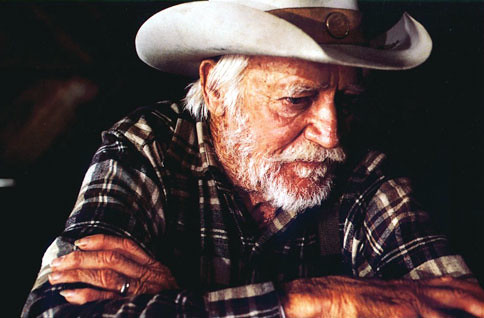 I have read a couple of reviews that have a different take on this film. The central issue is the story that Alvin tells the young pregnant girl about Rose's children. He says, "Someone else was supposed to be watchin' them, and there was a fire, and her second boy got burned real bad." One article argues that Alvin's vague references—"someone else" — and passive constructions — "there was a fire" and "got burned" — imply that he was the "someone else" who let Rose's children get hurt and then get taken from her.
The article says another clue is the burning house that appears in the background as Alvin flies down the hill. "This scene functions as a flashback to the earlier fire, the one in which Alvin's grandchildren were burned. Alvin's face, bathed in sweat and flickering orange with firelight, and his eyes, bulging and rolling in his head like a frightened animal's, express a terror that transcends his immediate situation. When intercut with those quick, jarring shots of the blazing house. The real object of that terror is unmistakable. Alvin is the unnamed 'someone' who was supposed to be watching Rose's kids. He let his grandson get burned. He caused his daughter's children to be taken away by the state. After he manages to stop his tractor, he sits panting and shaking in terror, staring at nothing, the burning house clearly framed in the background. He is trembling not just in reaction to his near-accident, but in an abreaction to that original trauma — another time when Alvin Straight lost control and events took on their own scary, unstoppable momentum."
It's a really long article, so I won't list all its points here, but it basically argues that everything on the journey, from the deer woman to the WWII vet, comes back to Alvin's role in the fire.
So, what do you think? Is this reading things into the story that just aren't there? Or is it a plausible reading?
A quirky mystery

My pick for July 16: "The Last of Sheila."
This odd whodunit is a lot of fun, especially for puzzle enthusiasts. When I saw it more than a year ago, I paused it shortly after starting so I could grab a pen and paper to play along as characters try to solve a murder mystery via process of elimination. (Not all of them survive the process.)
It's a little obscure, even for cult status, but Netflix does carry it. It has the greatness of James Coburn, the vapidity of Raquel Welch, terrific and terrible dialogue, a lot of that '70s campy nuttiness and a top-notch, twisty plot.
Subtlety
 What did Alvin’s subtle reactions to his journey add to the story? For example, when several semis passed Alvin and he turned his head and smiled, what did that mean? Did it set up an expectation that something important was about to happen? Did you ever think that there would be an encounter in a scene and then it just cut to the next scene?
Richard Farnsworth
 Richard Farnsworth in this role was the oldest person ever to be nominated for Best Actor. He was diagnosed with terminal cancer and killed himself with a shotgun just a year after this movie came out.
He had been a stunt man for 40 years before becoming an actor. He despised cursing, and he told Roger Ebert that the thing he was most proud of in his career was that he never had to say a bad word.
How much of his performance in this film do you think was acting, and how much of it was just Farnsworth being himself? Was Farnsworth perhaps a lot like Alvin Straight? What does Farnsworth’s death say about aging and how does that align with what Straight had to say about aging?

Reaction
Did you like The Straight Story? If so, you are in large company -- the average rating on Film Affinity is an 8.0, and according to Rotten Tomatoes, 95% of critics gave it a positive review. The consensus review was “slow-paced but heart-warming.” Do you agree?
Friday, June 22, 2007
More Van Sant

What other Gus Van Sant movies have you seen, and how do you think they compare with "Idaho"?
(I've seen Drugstore Cowboy, Even Cowgirls Get The Blues, To Die For, Good Will Hunting, Psycho, Elephant. My favorite of these is "Drugstore Cowboy" with the fantastic Matt Dillon and William S. Burroughs. I also really liked "To Die For" with Matt Dillon and Nicole Kidman — and River's brother, Joaquin Phoenix. These films were far more mainstream, at least in presentation, than "Idaho," but still offbeat and dark and humorous and sad.)

Thursday, June 21, 2007
Hustler heritage

After seeing "Idaho," I'm eager to revist the hustler movie to end all hustler movies, one that is at least visually referenced in "Idaho" and "Brokeback Mountain." Has anyone else seen "Midnight Cowboy" from 1969 (the only X-rated movie to ever win an Oscar)? I saw it a couple of times in college, but not since. If you've seen it recently, how do you think it's holding up?
Wednesday, June 20, 2007
Mom and Pop
What did you think of the parents and the parental themes in this movie?
Scott, like Shakespeare's Prince Hal with Falstaff, touts Bob as his true spiritual father; he denounces his real father but nevertheless accepts his financial inheritance. Mike's father has nothing to offer him, either spiritually or financially.
I love that Van Sant turns the typical Odyssean father quest into a mother quest for Mike. He seems to idealize her, even though it's not really clear why — he appears to have faith in the solidity and permanence of the parent-child bond, as we all probably do, even when it's clear that the bond has been shattered or never really existed in the first place.
Mike talks about how he might have been "normal" if his family had been normal. And Scott asks, "What's normal?"
And then there are the street kids who seem parentless, familyless, except for Bob and one another.
There seems to be a theme that, despite your actual blood relations and the things they give you or fail to give you, "what thou lovest well is thy true heritage." In other words, for a lot of people, especially outsider-types or people who weren't raised by June and Ward Cleaver, whatever love and comfort they eke out of life will be what they have managed to forge on their own.
Fast asleep
How effective did you think the narcolepsy element was? Did it add anything crucial to Mike's personality? And what did you think of the way it was introduced (the highlighted dictionary entry following Mike's initial bout)? I'm generally not a fan of "extracurricular" devices dropped into a film as explanation, but my objection to that may not apply here since the whole movie is a visual pastiche that doesn't even pretend to realism, except perhaps to emotional realism.
Tuesday, June 19, 2007
A good ending?
Christy alluded to a certain disjointedness in the film in an earlier comment. I agree with her on that. When I first saw it in the early '90s I really liked it, and even though I couldn't even begin to explain some of what was going on in the film, it made sense to me as a whole. I enjoyed the aesthetic experience of the film's journey, even though I found it enigmatic. On second viewing in 2007, the film seemed more flawed to me, or possibly dated, and I found myself being much more critical of it, though still appreciating it on the whole. One thing that really puzzles me is the ending. I sort of thought it might conclude with Mike's triumphant partying with the band of merry hustlers on Bob's grave, while Scott looked on rather jealously and contemptuously from afar. But instead it ended with Mike passing out on the road, robbed, then mysteriously carried away to some unknown future. I understand that the film's narcoleptic ending mirrors the beginning, and maybe it makes sense for Mike to be alone at the end instead of in a social setting, and there's sort of a theme of going where the road takes you, but the end still perplexed me. Any thoughts?
'Private' tunes
I thought the music choices in "Private Idaho" made a powerful statement. The recurring play of "America the Beautiful" was a disturbing undercurrent for comparing what American youths aspire to and what had become of Mike, Scott and the other film characters. Despite their freedoms — Mike, not tied to anyone or anything, and Scott above the law — both lived a piteous existence.
Though it was a contemporary hit when the movie came out, I also liked the contrast of Madonna's boppity love song "Cherish" playing in the background while different young hustlers recounted their graphic first experiences selling sex.
Though it was a contemporary hit when the movie came out, I also liked the contrast of Madonna's boppity love song "Cherish" playing in the background while different young hustlers recounted their graphic first experiences selling sex.
The Straight Story

Our next movie will be The Straight Story (1999), starring Richard Farnsworth and a John Deere mower.
pickin' and fiddlin'
Have we got a pick for July 2? Would that be by one of the esteemed Amys? Or Ben?
Monday, June 18, 2007
Only for money

Did you buy Scott's claim that he had sex with guys only for the money? Or did that strike you as a form of self-repression as in "Brokeback Mountain"? (In "Brokeback," the guys are clearly in love, but for one of them there still is a sense that two men can't truly be together — they can meet in secret and have sex, but they can't have a meaningful life together, only "vacations.")
The bard of Portland

Did you like the Henry IV story line? Do you think it was well-executed?
Here's an excerpt from an Amy Taubin piece on "Idaho." I think it's a good big-picture description of the film:
What is striking about Idaho today in light of Van Sant’s later films is its extraordinary hybridity. Where Elephant (2003), Gerry (2002), and Psycho (2000) are structured by a single daring formal device—the extended tracking shots in Elephant and Gerry; the shot-by-shot mimicry of Hitchcock’s original in Psycho—Idaho is a collage that includes even a kitchen sink and some Little Dutch Boy cleanser to scrub it down. Van Sant mixes and matches scenes of documentary-style realism with campy musical set pieces, improvised dialogue with bowdlerized Shakespeare, dream sequences shot in grainy Super-8mm with 35mm vistas of the Pacific Northwest, and, on the soundtrack, Rudy Vallee with The Pogues. The main source materials for Idaho’s screenplay were two completely separate scripts and a short story, all written by Van Sant. One of the scripts was a modern-day adaptation of Shakespeare’s Henry IV.
Did this work for you? Did you find a coherent whole?
Before "Brokeback"

One thing that really intrigues me about this film is when it was released: 1991 — almost 15 years before "Brokeback Mountain," which we all tend to think of as the breakthrough "gay" movie using popular straight actors as the male leads. "Idaho" was notable because it took two teen idols — River and Keanu — and cast them in queer roles. (Apparently, Keanu accepted the role immediately, but River had to be talked into it). "Idaho" is talked of as a "gay classic," and its director is obviously highly esteemed — so the film has prestige through that connection, but the artsier "Idaho" was not a mainstream sensation like "Brokeback," despite the wildly popular actors in it. Do you have any thoughts on that (apart from the "artsy" factor)?
And do you think of it as a "gay" movie?
(My own experience, on second viewing, is that the gay theme is almost incidental in "Idaho" and is crucial in "Brokeback.")
Incidentally, the campfire scene in "Idaho" — two "cowboys" in the wilderness — made me think of "Brokeback."
Saturday, June 16, 2007
Thursday, June 14, 2007
Literary tie

I know no one has time to do this, but if you want to greatly enhance your Own Private Idaho experience, I recommend reading John Rechy's 1963 novel "City of Night," which, along with Shakespeare, was Gus Van Sant's inspiration for his film. Apparently Van Sant gave copies of the book to River Phoenix and Keanu Reeves to model their gay hustlers on. River just skimmed the first page or so, Van Sant says in the DVD extras, but Keanu went on to read all of Rechy's books.
I'm reading it now, and it's beautiful and addictive. It was named one of the 25 all time "best gay novels" and is widely taught in literature courses. Rechy himself was a gay prostitute and hid the fact that he was also a really brilliant writer; apparently, men buying boys off the street like them to be pretty dumb. Anyway, Rechy, pictured at right, hustled and wrote himself into a professorship at USC.
Tuesday, June 12, 2007
Hollywood ending?
At the end, when Olivia, Joe and Fin are drinking on her porch, there's a hint that Fin might hook up with the librarian girl. Those two had a sweet exchange at his place, and he attempted to intervene when the bullying boyfriend (the father of her expected child?) was being mean to her. Did you think the two of them as a couple seemed plausible? I didn't feel any spark from Fin for her until at the very end. Was that line about their hooking up sort of contrived? I felt the movie had a satisfactory ending with the three friends reconciling. I'm not sure that the hint of romance added much to it. What did you think?
Wednesday, June 06, 2007
Take a look
(from Kim)
What was your reaction to Fin's climbing on the bar and shouting "Take a look"? I had the sense that the hurt feelings from earlier that day and the copious alcohol played the major role in the outburst, but also the hurt feelings from a lifetime. And the scene, I thought, was well done (the camera work — the crowd, the dizzying feeling); it gave a good sense of how all these factors were roiling together to produce an emotional tornado. And it was a situation where he wasn't overtly under attack, where the "provocation" didn't necessarily merit the response; but one more subtle, where he could "feel" all these sidelong glances and whispers, some real, some imagined, not just from the bar that night, but from everywhere his whole life, and he was so desperate for it to STOP.
What did you think?
Tuesday, June 05, 2007


Monday, June 04, 2007
Olivia
Patricia Clarkson's character, Olivia, was quite brilliant, even if rather cliche on the surface: the zany, absent-minded artist who runs the same person off the road twice (i.e., doesn't learn from her mistakes, at least not right away), who dislikes cell phones and comforming to social expectations. She's something of a type, but then there are surprises: the profound grief of losing a child, the bitterness of a separation, the giving up on life. She's sunny and dark at the same time. Zany and solemn. And beautiful and ugly — the ugliness referring to the way she treats Fin when he is trying to help her. Did that seem in character to you? I was taken aback by her bahavior, but then it quickly made more sense to me. When she harshly said, "I'm not your mother, and I'm not your girlfriend," she was asserting her own identity rather than trying to run Fin off, like saying I have stood in that relation to people all of my life, and now I'm just me. I'm just me in my own right. And Fin understands that. His loneliness and his own struggles to find a comfortable place in life have prepared him to understand that and to be an honest-to-God friend to her.
Cleo
I was delighted to see Raven Goodwin, who was so great in "Lovely and Amazing." Cleo was an interesting character to me because we never really know who she is -- other than that she likes trains -- or who her parents are or where she comes from. Any thoughts on Cleo's role in the film?
Isolation
What do you think this film has to say about loneliness and isolation? The three main characters are each alone: Fin because he has withdrawn from the cruelty and constant spectacle of being a dwarf, Olivia because of her persistent grief, and Joe because of his overbearing good humor and neediness. This may be the only thing they have in common, but they forge a very touching friendship.
Dwarfism
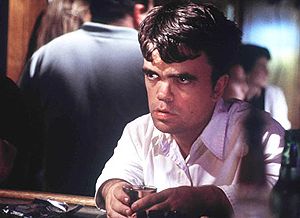 I have heard people with dwarfism on television talk about the way they are treated in society -- that people stare, point at them, pat their heads, make fun, etc. Even so, it was surprising to me to see Fin treated as such an oddity. I assume this was partially because he was in such a remote area of New Jersey, but really, have these people never seen a dwarf before? The woman who took his picture in the convenience store? Fin's reaction was priceless.
Characters
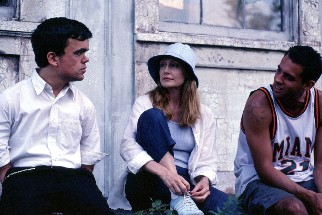 I was very impressed with the characters in this movie. We get a sense very early on of who these people are and what makes them tick. Very little actually happens in "The Station Agent," but I found it fascinating to watch the characters interact and their relationships develop. Did you have a favorite character?
Thursday, May 24, 2007
Get thee behind the camera
I apologize if we've dished on Shyamalan's presence enough in earlier threads, but I wanted to ask how much his presence affected the movie's flow for you. I thought his acting was good and his presence plausible. But watching him kept yanking me out of the story and movie-watching experience. I wondered whose role had been cut down to give him more screen time. I wondered where, as a principal character, he was during the swimming pool party scene. (I guess he had to be behind the camera then.) So he kept interrupting the movie for me and, like the implausible scenarios I listed in the comments with dw's first post, there were too many reasons to lose the "story" feel and stay in critique mode instead.
And another question: Does watching a movie for Cinema Chatter disrupt everybody's ability to "lose" themselves in the story? I either watch it through and enjoy, or take a few notes along the way, and then rewatch parts, especially after discussion starts. Can you watch a film the same way if you plan to critique it?
And another question: Does watching a movie for Cinema Chatter disrupt everybody's ability to "lose" themselves in the story? I either watch it through and enjoy, or take a few notes along the way, and then rewatch parts, especially after discussion starts. Can you watch a film the same way if you plan to critique it?
Paul Giamatti
I am part of the .000009 percent of the population who hasn't seen "Sideways," but I like Paul Giamatti. He's a good leading man in this part, someone likable, and I was interested in what would happen to his character.
Casting and script were handled well for Cleveland, too. He's not one of those improbably handsome actors who you could never imagine as a building super. He doesn't have to have a romance or, god forbid, an obligatory love scene the way all blockbusters seem to require anymore. It stretched my patience how the movie just skipped over how Cleveland convinced all of his neighbors about Story's story, but he came across as the kind of guy people liked and trusted. He was an ordinary man inexplicably chosen to play a great, important role, and he lived up to his end. For me, he redeemed the movie from its flaws.
Casting and script were handled well for Cleveland, too. He's not one of those improbably handsome actors who you could never imagine as a building super. He doesn't have to have a romance or, god forbid, an obligatory love scene the way all blockbusters seem to require anymore. It stretched my patience how the movie just skipped over how Cleveland convinced all of his neighbors about Story's story, but he came across as the kind of guy people liked and trusted. He was an ordinary man inexplicably chosen to play a great, important role, and he lived up to his end. For me, he redeemed the movie from its flaws.
Wednesday, May 23, 2007
Mermaids schmermaids
When is someone going to make a film about a pretty merMAN (or a Monsieur Narf)? And if they do, will he be a peaceful, delicate, passive temptress (or tempter), like most of his female counterparts? A pale little stud muffin who has trouble talking? And what actor would be your ideal merman? (Boys, it won't make you gay to pick someone).
Found in translation
The scene I enjoyed most was when Young-Soon Choi was at the dance club and was translating over the phone for Cleveland and her crusty mom, who made Cleveland stay out in the hall. The stereotype of Asians having ancient wisdom/remedies ("ancient Chinese secret") was a bit annoying. I mean, why couldn't the Mexican dude be the tale teller? Nevertheless, the scene was well done and humorous, with a goofy party girl being the link between two individuals who couldn't otherwise understand each other and who didn't really want to deal with each other at all.
So there's that story in the story, an explanation. But there's a more general explanation at the beginning of the movie, before the action starts, where the primitive line drawings are used to explain how humans lost touch with the sea people and became a degenerated civilization. The drawings show up again at the end as the credits roll, to reinforce the fairytale frame of reference. Do you think these various stories about the story work? Do they work well together? Did the intro story intrigue you?
So there's that story in the story, an explanation. But there's a more general explanation at the beginning of the movie, before the action starts, where the primitive line drawings are used to explain how humans lost touch with the sea people and became a degenerated civilization. The drawings show up again at the end as the credits roll, to reinforce the fairytale frame of reference. Do you think these various stories about the story work? Do they work well together? Did the intro story intrigue you?
Tuesday, May 22, 2007
Camera work
DW, I'm eager to hear, since you based your selection on the cinematographer, Christopher Doyle, what you really think about the camera work in this movie. I really liked the opening scene where Cleveland was killing something under the sink (what was that, by the way?) and the characters were being shot from underneath the sink. I also liked the scene where Cleveland fell down near the pool in his first encounter with Story. I think the camera was in the pool, as from Story's point of view.
All Those Neighbors
Having a cross section of recognizable social types also had promise. Since the movie never left the apartment complex, it made it seem like a little village. But although the movie was plenty long, these characters seemed underdeveloped. They needed the help of somebody who can do quick character sketches in just a few scenes to give a bit of depth to this large cast.
How Do You Do That Again...
One of the best bits of this movie is how incompetent the characters were at fulfilling their part of the epic. Wouldn’t you be, too? I mean, who really does know how to send a not-quite-mermaid back to her water world? I didn’t study that in school. I’m not sure that playing D&D would have helped me much either.
This element could have been improved by having more than one source for the fairytale so that there were conflicts between the two versions. Also, I would have liked more ambiguity throughout. In particular, it would have been cool if there was some doubt about whether Story escape back to her world or got munched. It would have been a better movie, but it would have been hard to get it past the Hollywood masters.
This element could have been improved by having more than one source for the fairytale so that there were conflicts between the two versions. Also, I would have liked more ambiguity throughout. In particular, it would have been cool if there was some doubt about whether Story escape back to her world or got munched. It would have been a better movie, but it would have been hard to get it past the Hollywood masters.
Things that Go Bump in the Night
Like Erin, I also liked Shyamalan’s invented mythology and story. But I don’t think they realized it very well. The creatures were supposedly “things unseen”, but then they had the grass dog strolling around the halls of the apartment complex. Frankly, it wasn’t very scary. I suspect that they could have had a lot better result if their special effects budget had been hacked almost to zero and they were forced to make the best of vague glimpses and imagination.
That Big American Industry....
For the moment at least, this internet connection is working, so let’s get started...
Before I saw “Lady in the Water”, I didn’t realize that it had a big enough budget that they could build their own apartment complex from scratch. So it was more Hollywood than I expected.
Like I said when I picked it, all I really knew about it was that it was filmed by Doyle. He has done some great work with asian filmmakers, but I had not seen him work in a Hollywood type production.
Did anybody look at the extras that were on the DVD? Shyamalan has published this story as a children’s book and they showed some of illustrations in it. I might see if the library has a copy of the book because I think it looks more successful than the movie. Anyway, my overall reaction to the movie is that it had some very promising elements that never quite gelled. Before trying to pick that apart, do people have some first reactions?
Monday, May 21, 2007
Erin's pick: "The Station Agent"
 I was not feeling inspired this go-round, and I had some trouble making a pick. I came across "The Station Agent," though, and it really grabbed me. Sounds like a nice, character-driven story. And it features the remarkable Patricia Clarkson.
Friday, May 18, 2007
Another chick in the mall
The mall setting was probably my favorite thing about this movie. I love the conversation where someone asks why the zombies go to the mall, and the answer is "instinct." The mall where the movie was filmed was one of the first of its kind, according to the Wikipedia article, and it's interesting to see how early in the game it became an object of satire — a symbol of surburban boredom, materialism, time-wasting. The mall in American culture became not just a place to shop, but a place to hang out, to roam through zombie-like, staring at all the products that hold out so much promise of making us happy.
What were your thoughts on the mall's role in the movie?
What were your thoughts on the mall's role in the movie?
Thursday, May 10, 2007
survival
If Romero skewers anyone in this film, it's the hunting, fishing, Iron City-drinking types who respond so indifferently to what has become of humanity. (Though he does this scene with some humor.)
What struck me is how much safer they seemed, sticking together out in the countryside. What do you think of the foursome's decision to go it alone? Granted, I think they had to protect a precious commodity -- the helicopter -- but otherwise, survival instinct would be safety in numbers.
On the other hand, look what happens when law deteriorates to a point where Wally can butcher people according to his personal, bigoted agenda. Or what if they settled into a mini-theocracy or some other form of rule? That's one of the reasons I like films or books ("The Stand," "Lord of the Flies") with a survival setting. Maybe the undead aren't the scariest threat a character deals with.
In media res
What did you think of the film beginning in the middle of things, with no prelude whatsoever? Havoc and zombies and crisis from the first minute.
Wednesday, May 09, 2007
Alternate ending
The Wikipedia link I mentioned earlier delves into making of an alternate ending for "Dawn." In the original plan, Romero had Peter shoot himself at the end after all, and Fran was to thrust her head into the moving helicopter blades. (The special effects crew was probably pretty psyched for that).
Like most movie viewers, I preferred the ending Romero chose in which Fran and Peter get away, but because I saw "Dawn" before "Night," I didn't understand one of the basic concepts about the zombies. I thought that you didn't become a zombie unless they infected you. But as "Night" tells it, if you die of any cause in this new era, you become a zombie, unless it's a fatal head wound. By that logic, Fran, Peter and the other survivors will eventually have to choose suicide or become one of the undead. (Barring a "fortuitous," fatal head injury.)
That made me rethink Romero's ending -- maybe he shouldn't have chosen the "happy" version.
racial issues
Note: This is a spoiler for "Night of the Living Dead" (which came before "Dawn").
"Night" was an unconventional horror film for many reasons, but among them, the hero of movie was black, and the year was 1968. While he survives the zombies up to the last minute of the film, he dies because a civil patrol posse of good old boys mistakes him for a zombie and shoots him in the head. The film ends with newsreel-type images of the hero being dragged out of the house, to a pile of bodies and then set afire -- a disturbing image in a time of civil rights turmoil.
I think that's relevant background to why the introduction to the SWAT team in "Dawn" was set in the projects, with a racist unit leader controlling a bloody charge into a building where families wouldn't give up their undead. I squirmed when Wally called the people the n-word and called their building "a fancy hotel -- they've got it better than I do."
Who's your daddy?
Was there a misunderstanding about the conversation to abort Fran's baby? Peter asks Steven, "Do you want to get rid of it?" in Fran's absence -- and she took it to mean that Steven and the others would be making the call. I thought Peter meant "you" in the sense of "you and Fran" when he asked it.
In any case, it was an interesting moment in the movie for Fran, one in which she realizes she is a minority in the mini-society they've created, and that her rights could be revoked.
In any case, it was an interesting moment in the movie for Fran, one in which she realizes she is a minority in the mini-society they've created, and that her rights could be revoked.
Macho, macho men ...

Were you stranded in a big city full of zombies, it would be handy to have at least one SWAT team sniper in your gang. And once you've got two, the testosterone is practically contagious! Was the group machisimo responsible for any of the character deaths? And what happened to Steven -- was his carelessness driven by a desire to protect Fran? A need to be one of the boys?
Tuesday, May 08, 2007
The plot not taken
The smart script for this film didn't develop into some of the obvious lines directors would take. Chief among them was the storyline of Fran's pregnancy, which is 1) not revealed until about a half-hour into the movie (and her smoking might throw viewers off the scent, even if the habit was less verboten in the late '70s), 2) does not turn her into a archtypal expectant mother who will suffer health problems and need protection and 3) is not seen to full-term, which is what I expected. (Another director might have succumbed to having Fran be mid-labor when the bikers/zombies get in, for example, like there wasn't enough suspense to go around.)
Also off the path was how some of George Romero's characters developed -- who would be heroic, who would survive, who would elicit sympathy. Did you experience any surprises in that respect?
I'll post about the ending tomorrow, but the earlier Wikipedia link had details about the alternate scenes filmed to conclude the movie, which also would have defied conventional audience expectations.
splatter chatter
I can't decide whether this is a good early question, but it might surface later, so here goes.
I like horror movies. I like the cathartic feeling at the end, if the film's good, and I like believing in supernatural elements against my better judgment (like in "The Shining") during the movie's run. But most horror movies feature a body count to heighten the suspense/gore factor/move the plot along, etc. -- and that's not something others may want to see.
As I rewatched "Dawn" last night, even I thought the initial killing spree and gore was intense, and I'm desensitized from all the other horror films I've watched. Did the violence turn you off initially or throughout the film? Did it detract from the pleasure of watching the movie?
The lowdown on "Dawn"
I don't believe everything my parents told me -- and I feel the same way about Wikipedia -- but it has an extensive, interesting entry on "Dawn of the Dead". It delves into a lot of the shooting challenges of the movie -- trying to film at a mall after close, managing all the extras (some of whom would show up drunk) and handling special effects.
Don't read it until you've seen the film, but it's fun.
It also made me aware that a fourth film came out in 2005, "Land of the Dead," which I plan to watch. Also, a "Diary of the Dead" was shot in late 2006. It reads like a "Blair Witch" retelling of the original lore. There are links to those films from the Wikipedia entry above.
Monday, May 07, 2007
Take a Gamble
One of my most favorite cinematographers is Christopher Doyle. I just realized that I haven’t seen either of the two films he shot last year, so I’m picking one of them for our next movie. In 2003 he shot a film for Pen-Ek-Ratanaruang that is known in English as “Last Life in the Universe”. This is a very cool film and reminds me in some ways of the movies that Doyle has made with Wong Kar-Wai (one of most favorite filmmakers). One of Doyle’s 2006 films is another one with Pen-Ek Ratanaruang, so I thought that this should be the pick. However, my local store with a strong collection of art and asian film didn’t have it, so I thought maybe it will be too hard for people to track down.
So, Doyle’s other 2006 movie is one he did for M. Night Shyamalan called “Lady in the Water”. Although Shyamalan has been making movies for fifteen years, I haven’t seen any of them yet. I didn’t even see the highly popular “Sixth Sense” from 1999. So, thus far, I don’t have much idea if I will like Shyamalan, but this one at least has Paul Giamatti which sounds like a promising start.
There you have it then, my basically blind pick: “Lady in the Water”.
The dead shall walk the earth ...

But not on my watch today.
Went to a dubious-looking video store on the east side of the city to pick up "Dawn of the Dead" (and was pleasantly surprised by the Criterion collection and other choices -- all about a buck less than Blockbuster and LH) and found "Dawn" right away. Get to the counter and realize I picked up the 2004 remake! I congratulate myself for catching this amateurish mistake and go back and pick up "Dawn" and go home.
I put the DVD in the player and realize I checked out "Day of the Dead" instead.
And my co-worker is right -- it's the dud in the series. I felt like I was watching an excerpt from "T.J. Hooker" or "Hunter," except with undead.
So if you want to talk about "Dawn" today, you can start without me -- or I've seen it before, so I can discuss. I'll be in full moderating mode tomorrow.
Subscribe to:
Posts (Atom)