Thursday, November 08, 2007

The mask


This is Ali Karimi, of the Iranian soccer team. His face is the one seen on the poster the girl is forced to wear to the bathroom (an important and fascinating scene we haven't talked about yet!)

Wiki says: Mohammad Ali Karimi Pashaki (Persian: محمد علی کریمی, born on November 8, 1978 in Karaj, Iran) is an Iranian football player. He was the Asian Player of the Year in 2004. He currently plays for Qatar SC, having left German giants Bayern Munich. He is often referred to as the "Asian Maradona" and is believed to be one of Asia's greatest players.

Any thoughts on why his face may have been chosen to hide the girl's?

The title

Here's an explanation of "offside" in soccer. It's kind of a difficult rule to understand and to call if you are a ref:

In outdoor soccer, an offside foul is called when an offensive player, or attacking player, is passed the ball and there are not at least two opponents between him or her and the goal line. Usually, these are the goalkeeper and one other defender, but not necessarily. The penalty for an offside foul is that the other team is given possession of the ball.

The rule was created to prevent offensive players from "cherry picking" near the opponents' goal. Without the rule, offensive players could hover near their opponents' goal even when the play is on the other side of the field, with the hope of a long pass and an easy goal. The offside rule still allows for the chance to score.

It's also important to note that offside applies at the moment the ball is passed, not at the moment the ball is received. Therefore, if the offensive player that will receive the pass is "onside" at the time the ball is passed, but then runs behind the unsuspecting defender before receiving the pass, the receiving offensive player is not offsides.


Why do you think Panahi titled his movie "Offside"?

Wednesday, November 07, 2007

The ending

I think the conclusion of the film was just breathtaking — the way all the turmoil simply dissolved into celebration, the way the captors and captives, after this long day of strife, just spilled out of the bus into the beautiful, jubilant crowd, into the freedom and anonymity of the urban night, all worries dissipated, all obedience to irrational authority evaporated. I touched on this — and the significant playing of the Persian national anthem — earlier as one of my favorite things about the movie, but I think it bears consideration in its own right. The ending is so right for me that I can hardly imagine it ending in any other way. I can see why the filmmaker was praying for victory. Do you have any thoughts on the film's resolution?

Here, there and everywhere

What did you make of the regionalism in the story? We have people from Iran and People from Bahrain in the game, of course. And in the cast of characters we have a soldier from Azerbaijan, a soldier from Mashad and a soldier from Tehran. There are also plenty of rural/urban references. The whole cast could have been from Tehran. What was the purpose of varying it?

The Firecracker Kid

What did you make of this little hooligan? Why was he introduced into the film? What did you make of his interactions with the women?

I don't know about you

But when I saw this movie, I thought, "I'll be damned. He's right. There are no gay people in Iran."

Tuesday, November 06, 2007

Ben’s pick

Isn’t it time we did a Norwegian film?

Monday, November 05, 2007

Favorite things

My two favorite things about this movie:

(1) The triumph of joy. At the end, the celebration consumes all worries, fears, repression. The Persian national anthem is playing; as Panahi notes, it's a song redolent of Persia's renaissance, its golden days before the Islamic invasion. (The Iranian author Marjane Satrapi also observes how the playing of this long-banished song stirs the people — not to nationalism, but to humanism).

(2) The intelligent mixing and balancing of issues and individuals. I think Panahi ran a high risk as he used the documentary style of making a purely "political" film, an "issue" film, but it went so much deeper than that. The rural soldier (what a great character) yells at one of the women, "Don't you know the difference between men and women?" And the question just hangs throughout the movie, dumb and irrelevant.

What did you like most about the movie?

A documentary?


Did you like the documentary feel of this film? Panahi talks a lot in the special feature section of the DVD about how it was made and why the documentary "style" was important to him. One thing he said that I found very interesting was that all his movies are oriented toward public life, with a preponderance of street shots, because women cannot be filmed in domestic settings without the hijab, even if they are alone in the house with their family or sleeping or in some other situation where it would not be illegal for them to have their hair uncovered. Panahi refuses to film "a lie," so he reoriented himself and his cameras artistically. Similarly, the women at the game could not actually see the game, so in an effort to align himself with their point of view, the movie contained no game shots except for what the women themselves could see (on the way to the bathroom, for example, or on the TV on the street). To make this movie he had to present it to the Iranian film authorities as something other than what it was. His crew submitted a fake script and the authorities did not know of his involvement in the project until very late in the day. He used a very small camera, not a 35 mm, so he would blend in at the stadium with news reporters. His film was largely made in real time. Most of the stadium shots were from the actual game, as was the celebration shot at the end, and he did not know the outcome of the film until the game was over. He also noted that the movie is the same length as a soccer game. ... Did all this work for you? Or would you have preferred something a little more featurey and less documentary?

Special features


Most special features on DVDs are enlightening in some way, but this one — the interview with director Jafar Panahi — is really a must-see for insights into how and why the film was made. He says an experience with his daughter inspired the film, and he tells about how it was made in 39 days, his battles with censors, and how the film's outcome, marvellously, really depended on the outcome of the game. So, if you have the chance, check out the interview! It will also give you a glimpse into what a truly fine gentleman and humanitarian Panahi is.

Iran


Iran is one of those countries, thanks to decades of bad relations between our governments — and, let's be honest, a lot of uninformed rhetoric — about which there are innumerable misconceptions and stereotypes. Watching a film made in Iran by an Iranian, did you find yourself questioning any preconceived notions you had about the country and its culture. Did anything surprise you?

Tuesday, October 30, 2007

Brecht

Criterion has just released Georg Wilhelm Pabst’s 1931 film of Weill and Brecht’s “The ThreePenny Opera”. It’s on my list.

Oh, and Cl, “The Lady Vanishes” is on their coming soon list. And Kc, “Kind Hearts and Coronets” is on Criterion. Alec Guinness in top form.

Sunday, October 28, 2007

Dreyman

Any thoughts on Dreyman? He was willing to work within the system and avoid criticizing it. He became a successful artist by playing by these rules. He even tried to steer his less restrained artistic friends away from public comments that would hurt their careers. When he finally broke, it wasn’t over his own treatment, but because of what had happened to his close friend. (The Minister of Culture blackmailing his girlfriend for sex didn’t help either.)

Friday, October 26, 2007

OT: In the mood to be scared?


With Halloween approaching, it's the best time of year to find some good horror movies on television. Several channels are running great movies, but I highly recommend AMC's lineup for a taste of the "new classics." They started Monsterfest on Oct. 22, actually, but the remaining lineup is promising:

The Howling
Psycho
Magic (with Anthony Hopkins, and so disquieting, I never finished it)
The Fog
The Exorcist and Exorcist II
Violent Midnight
Children of the Corn

And also various chapters in the Halloween series (none of which are worth your time after part II), and Alien, Friday the 13th and Hellraiser titles.

Also, the Fox Movie Channel is running a lot of older black-and-white: The Alligator People, The Undying Monster and more.

I'm going to try to sit through "Magic" this weekend.

Monday, October 22, 2007

The ending

How did you feel about the ending? I found it completely satisfying and terribly moving. (OK, so I liked the movie a lot.) But others have found it too maudlin. Did it strike the right balance for you?

Change of heart

Did you find Wiesler’s change of heart convincing? Do you think his actions were believable in light of his position and who he was?

Ulrich Mühe

I thought Ulrich Mühe was absolutely stunning as Captain Wiesler. His performance was so subtle. Everything was conveyed with a raising of an eyebrow, the tilt of his head, the tightening of his forehead. And he takes the audience right along with him with these signals.

Interestingly, Mühe discovered in his own Stasi file after the German reunification that his second wife had been informing on him. He said his experience was helpful in preparing for this role.

Mühe died in July of stomach cancer.

Characters

I thought the characters were drawn rather brilliantly. I loved that Wiesler, for example, turns out to be more than the stereotypical robotic Party tool that he at first seems.

I also loved that you were never exactly sure what any given character was going to do at any moment. In the New York Times review, the writer said the movie reminds us that even in an oppressive state, humans are still burdened with free will. The characters again and again faced monumental decisions, and I was never positive about which way they were going to go. The characters felt very real and human to me, and I cared very much about each of them.

"The Lives of Others"

Well, what did you think? Any general thoughts to share?

Did you enjoy the story? The pacing? What stood out to you?

Kim's pick


Here's one from Iran that I've heard good things about. I've recently been reading everything I can get my hands on by Iranian author Marjane Satrape. This film has nothing to do with her, but it deals with the sort of topic she would heartily engage: the banning of women from public life — here, a soccer game — in the Middle East.

Thursday, October 11, 2007

Fric and Frac

What did you make of the son of the boss's brother and his friend? Why was this goofy pair in the movie? Did the disability have a special significance?

Wednesday, October 10, 2007

Haruna's Hit

In another thread, Kc mentioned that she found Haruna’s “ridiculous hit song to be somewhat moving and melancholy when stripped of its pop beat and electronic music”. I thought the song was a decidedly good bit of tween pop product with a strong hook and just the right sappiness in its idolized image of love. I would never sit around and listen to it, but I thought it was pretty good for what it was. And I was also impressed with how well it worked as a melancholy lament. Ben, what is your reaction to the two versions of this song?

Dubious Movie Making Devices?

One of the pleasures of having cultivated a distaste for certain movie making devices is that I can be all the more impressed when a filmmaker puts one to good use. I’ve already mentioned that Kitano did a great job of subverting my expectations about the bunraku puppets as a framing device. I would suppose that in general I’m irritated if a movie superimposes an image. Mostly this is done by ham-handed filmmakers and I’m going yeah, yeah, I got your point already so how ‘bout we move on now, ok? But Kitano is certainly not ham-handed and everything else about this film shows economy and poise. So the superimposed images kind of surprised me the first time I watched the movie. I wasn’t sure if I liked them, and I wasn’t sure if they improved the film. On second viewing, they are, of course, no longer surprising. I’m also inclined to think that they are far more integral than they first seemed. There were three, weren’t there? A picture of Haruna imposed on the blood at the car wreck, a picture of Nukui imposed on the blood being washed from the street, and a picture of bunraku puppets imposed on the costumes on the clothesline. Any thoughts?

Tuesday, October 09, 2007

The Threads

I thought the costumes were wonderful. The ever more bunraku-like outfits that the beggars wear were most obvious, but all the costuming fit very well. After watching the interview with Yohji Yamamoto, I’d like to take a world trip where we visited all his favorite haunts while wearing his threads. Bound to be a good time.

Miho Kanno

Miho Kanno had to play Sawako almost without speaking. She spends a lot of time on screen and is featured in many close-ups. It must intimidating to try and play such a role and develop your character with almost no lines. But I was impressed with her performance. It was a good call to have her fixate on color and minutia. Color was almost a character in this movie. And I thought the scenes with the blow toy were wonderful. Sawako’s frustration after the ball was crushed was a poignant reflection of her incomprehension of how her life had also been crushed.

The Weave

Our movie is not presented chronologically, or even chronologically with flashbacks. Instead it jumps foreword and back in time seeming at random, and we are seldom shown how the three stories relate to each other through time. For that matter, the three strands touch each other only through the wanderings of Sawako and Matsumoto as the bound beggars walk unaware through the other two dramas. Did you like this way of constructing a movie?

The Real Puppets

The first time I watched this movie, the bunraku puppets had receded into my sub-consciousness until right before Sawako and Matsumoto trudged up over that hill in the snow and saw the costumes hanging on the clothesline. Right before that scene, I suddenly thought, wow, they look like the puppets. No sooner had I had that thought, but Kitano cuts to the image of the bunraku puppets superimposed on the clothesline. I was much amazed that the timing of the film perfectly matched my own growing awareness.

At what point did you come to see the bound beggars as puppets?

Fairy Tales

Two of our stories seem like fairy tales: the bound beggars, and the woman who waits all her life on a park bench for the boyfriend who doesn’t return. But again, the story of Haruna Yamaguchi and Nukui is different. This is just the kind of thing we expect from a fixated fan who has no life outside of worshiping the star. What do you think of weaving this all too believable story between the other two more magical tales?

Betrayal?

The three relationships in “Dolls” are all doomed. In two of them, Sawako/Matsumoto, and Hiro/Ryoko, you can say they are doomed by betrayal that cannot be set right. But what do you make of the story of the pop idol Haruna Yamaguchi and her fan Nukui?

Dolls

Should we start with first reactions? Takeshi Kitano was known for movies about Yakuza (“Brother” 2000) and cops (“Hana-bi” 1997) that were, at times, quite violent. So when “Dolls” came out in 2002, I wonder if it really found its audience. But then I’m not sure who had been watching him. I’ve not seen “Brother” or the other two films in the ‘Yakuza Trilogy’, but I did see “Hana-bi”. It is strange for a cop film. It centers on character not plot. Key characters are ex-cops instead of active duty. And it focuses on efforts to cope, or failure trying, that would never be found in your bang-bang-get-the-bad-guy flick.

Still, “Dolls” is an unusual movie that doesn’t readily fit into a category. It has a framing device of puppets that turns out to be more integral than a mere framing device. Color and costume are front and center in the presentation. And there are three stories braided together like the rope on the ‘bound beggars’.

Did you like this? Is it too stylized or abstract?

Monday, October 08, 2007

Location, location, location

I rewatched "Vertigo" last night and was struck not so much by the story, which I found clever but ponderous, but by the importance given to the location. Rick, you mentioned that you like "Vertigo" because you like San Francisco, and that's a good reason to like it. The city is as much a character in the movie as Jimmy Stewart and Kim Novak. The location was one of the things I liked best about "The Lady Vanishes," too. Alpine, scenic. Storybookish and sinister. Cosmopolitan and provincial all at once, like San Francisco. And location was a big draw in "The Man Who Knew Too Much," too. Morocco and London. And the Americana of "Psycho." The French Riviera of "To Catch a Thief." On and on. And the locations are not just scenery. They're integral to the story.

I read this when I was looking up somethng about "Vertigo": According to Herbert Coleman, Vertigo's associate producer, Hitchcock often picked a location and then developed a story to be filmed there. He liked to show a familiar location and introduce a twist of malice. When he first saw San Francisco, he said it would be a good place for a murder mystery, and he chose a French novel, "D'Entre les Morts" (From Among the Dead).

Next pick

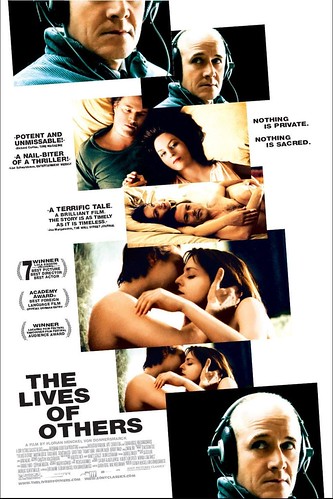
I have been wanting to see "The Lives of Others" for some time now, and it's finally out on DVD.

East German political oppression, spying, romance, compassion ... Enjoy!

Saturday, October 06, 2007

What's in your Netflix queue?

Do you save your queue for Cinema Chatter picks, or do you have some other must-sees or guilty pleasures on your list? Some of my queue: "The Abominable Dr. Phibes," a Miss Marple TV movie collection, "Night Porter," "Alice, Sweet Alice," "Pan's Labyrinth" and "Martha's Spring Gardening."

Also, I noticed that Netflix lists "Dr. Strangelove" among local favorites for Lawrence. Do you think our requests put it on the list?

Friday, October 05, 2007

A Quick Film Poll

Who is your favorite Russian agent?

I’ll go with Severn Darden as V. I. Kydor Kropotkin in the satirical gem from 1967 “The President’s Analyst”. I’d seen this film as a kid, but could only remember two scenes from it and the overall arc of the story. A film blogger reminded me of it recently and spoke in such glowing terms that I had to see it again. Glad I did.

Who else had a good turn as a commie spy?

Hitchcock's men

I like this description of Michael Redgrave from our big film book: "His debut was the prancing musicologist in Hitchcock's The Lady Vanishes, a lively study of the ingenious idiot hero, too seldom investigated by Hitchcock."

We talked a little about Hitchcock's leading ladies (cl, I meant to ask you what you thought about Doris Day). Do you have a favorite Hitchcock "hero"? Or maybe another way to phrase that is simply Cary Grant or Jimmy Stewart?

Friday, September 28, 2007

Recommendations

I'm trying to make a dent in my New Yorker magazines, which have been piling up week by week lately. I just came across this in a recent issue: a highly recommended film about the Iraq war starring one of my faves, Tommy Lee Jones. It's called "In the Valley of Elah." Lots of "brilliants" and "wonderfuls" surrounding this. I think it'll be released in November. Also features Susan Sarandon. (Rickydoodle, I thought you in particular might be interested in this, given our "Jarhead" discussion.)

Also, I just got around to reading Marjane Satrapi's autobiography, written in comic-book style ("Persepolis"), about growing up female in Iran just before the Islamic Revolution (women wore miniskirts in Tehran) and after (strictly enforced veils and chadors). Satrapi's parents were progressive intellectuals, and, after the Iraq-Iran war began, managed to send their daughter to Austria, where she received a liberal European education (vs. the misogynist, nationalistic bullshit that was passing for schooling in Iran). As I was ordering another of her books, the lovely sounding "Chicken with Prunes," I noticed that "Persepolis" has been made into an animated movie that'll be released in the U.S. this winter. I can't wait!

Thursday, September 27, 2007

fancy camera work


One of many things I love about Hitchcock movies is the use of terrific camera work -- a scene so clever or well-shot that I stop to appreciate it regardless of how engrossed I am in the storyline. The best example would be the "Strangers on a Train" scene where Farley is playing a tennis match, and you see the crowd's gaze moving left to right, following the ball, all except for Bruno, who's staring at Farley. Creepy.

In "The Lady Vanishes," I thought the standout moment was when the noise in the train picks up, and Miss Froy slowly traces her name on the train window. Iris had just woken up, and Miss Froy was babbling about her million Mexicans, and all that context made me think on first viewing that the scene was just a dream. It was an interlude into the surreal part of the film, and I found the camera work to be clever.

Tuesday, September 25, 2007

Cricket or bust!


Ever-useful Wikipedia entry on Caldicott and Charters:
"In 'The Lady Vanishes,' the pair are hilariously singleminded cricket fans, rushing back to England to see the last days of a test match. They proved so popular with audiences that they recurred in the Gilliat-and-Launder films 'Night Train to Munich' (1940, also starring Margaret Lockwood) and 'Millions Like Us' (1943), and in the BBC radio serials 'Crook's Tour' (1941, made into a film later that year) and 'Secret Mission 609' (1942).

Do you suppose the filmmakers anticipated the pair's reception and thus left in so many scenes with them at the beginning of the movie? Because the lagging start easily could have been fixed by taking out the recurring scenes where they share a room with the maid. Erin said earlier that "LV" was like watching three distinct movies, so maybe stock insular Englishmen were a better fit for a different kind of film. Consider the comparative setup for the illicit lovers -- their backstory was set up quickly and effectively before the story went back to the lead developments.

Margaret Lockwood


Based on a few comments in earlier posts, are we in agreement that Margaret Lockwood didn't measure up as Iris? I'd credit her with at least becoming a more sympathetic character as the movie evolved, since she was such an arrogant, spoiled heiress to begin with. Maybe that bump on the head triggered her personality makeover. Or since this is a movie wherein nobody is who they seem (a governess as a spy, a high-heel-clad agent as a nun), maybe we're supposed to extend Iris the same benefit of the doubt.

Lockwood was all right. She depended a little too much on intense, aren't-I-lovely stares that made her come across more as an ingenue than an actress.

And I wonder whether Hitchcock would have cast her if he'd made the call. Given his proclivity for cool blondes, Lockwood might not have made the cut.

Dame May Whitty


I thought Dame May Whitty was another charming addition to the cast as the missing Miss Froy. I love all of her ramblings about Mother Mountain and Father Mountain, the tea a million Mexicans drink and all that. She might have been channeling Miss Marple -- that foxy sleuth who only seems dithery and amiable.

She was nominated for two Oscars for supporting actress, one for "Mrs. Miniver" and one for "Night Must Fall." The only other film she's appeared in that I've seen is "Suspicion." Sadly, I saw that such a long time ago that I don't remember her, but I'll rent it again.

Poetry and Puppets


Well, Kc’s instructions were to dazzle. Being on somewhat of a Japanese kick of late, I considered Miyazaki’s animation, probably “Spirited Away”. But then I started thinking about films you might never encounter except via something like this club. So that led me to the 2002 movie by Takeshi Kitano, “Dolls”. Then when I remembered that there are some fans of puppetry on this site, the deal was sealed.

Boyish Charm

What I liked best about our film was Michael Redgrave’s character. I think he stole all of his scenes fair and square. Margaret Lockwood was clever enough to bring a pretty face to the contest, but not clever enough to hold her ground.

One of my favorite Redgrave performances was as the school teacher Crocker-Harris in Anthony Asquith’s 1951 “The Browning Version”. It is out on Criterion—I recommend it to all.

All that (evil) jazz

This has nothing to do with Hitchcock. Just something interesting and sinister I heard on NPR's "All Things Considered" today during a segment on Shanghai jazz. An old Chinese guy was talking about his band, which fell in love decades ago with American jazz and became quite a popular group in Shanghai. Then the Cultural Revolution began and he, like all other artists and intellectuals, had to get "rehabilitated." Officials condemned Western music as the instrument of evil. They broke into his house and confiscated his saxophone, which they deemed "pornographic," and his piano. For the next 30 years, he and his fellow musicians could play only Chinese opera of the "revolutionary" variety. He said it became common in Chinese movies to use jazz as background music for villains and "evil" scenes. Crazy, huh?

Monday, September 24, 2007

Prewar tensions


Another point from “The Art of Hitchcock”:
“As in ‘The Man Who Knew Too Much’ and ‘The 39 Steps,’ the politics are again vague, but here the reason was as much the restrictions of British censorship as much as the writers’ deliberate ambiguity: In 1937 and 1938, English films had to maintain a steadfast neutrality about events in Germany and about German expansion throughout Europe. But this requirement paradoxically freed ‘The Lady Vanishes.’ Instead of serving a specific politic, the film became a tightly woven tale in which all appearances are deceiving and characters are sprung free for new relationships.”

Rate it


I hope you enjoyed “The Lady Vanishes,” which was described in one article I read as “a comic thriller” – a unique Hitchcock product. I rated it an 8 (rather than a 9 or 10) largely because of slow pacing at the start of the film. I’d even go so far as to say that the movie takes on a different identity when the main characters finally board the train (or at least until we see the street singer strangled). Prior to that, it felt like we were watching the setup to some screwball romantic comedy. The mystery-thriller doesn’t begin until some 20 minutes into the film – in other Hitchcock pictures I’ve seen, the plot develops immediately, or there’s a heart-pounding prequel (James Stewart, “Vertigo”) that entrances the audience from the get-go.

That said, the movie’s actually just 97 minutes. Did it feel long to you, or did you have a similar reaction to the beginning?

About the film

“The Lady Vanishes,” which came out in 1938, is based on a novel by Ethel Lina White. The screenplay is by Sidney Gilliat, who also worked with Alfred Hitchcock on “Jamaica Inn.” It was remade in 1980 with Cybill Shepherd and Elliott Gould as the leads and Angela Lansbury as Miss Froy. (She would be a good Miss Froy, but the video cover image of Cybill fleeing a train in a torn white dress says “STOP: Do not pass go” to me.)


Right now I’m reading “The Art of Alfred Hitchcock,” by Donald Spoto, which reports that though “The Lady Vanishes” was the crossover hit that helped bring Hitchcock from the U.K. to Hollywood, the film was set up to be made under another director – the script was written, cast announced and most preproduction under way. Nonetheless, it feels like a Hitchcock-brand film to me. Would anyone else have guessed this movie had a different stamp on it?

Next pick

In case there's any confusion, because of the swapping, about who picks next, it's DW (getting back to our original order). Dazzle us, hon.

Friday, September 21, 2007

Today’s random advice: a good time

My brother has been rating movies on the Netflix site, so we occasionally watch films that get recommended to him there. For some time he has noticed that a movie called “Once Upon a time in China 2” keeps coming up. He was a bit put off by the “2”, but finally added it to our selections. It was worth it. Not that I seen so many, but this is certainly one of the best of the Hong Kong “kung-fu” movies I’ve watched. It either transcends or perfects (I’m not sure which) its B-movie genera by using a more-or-less real historical setting, keeping its comedy just this side of slapstick, using that comedy to steer clear of hammy melodrama, and limiting the number and duration of the fights so that the big set piece dance number, err fight scene, in the temple doesn’t lose any of its manic wow.

Among other good-natured barbs, the film has continuous easy-going jabs at all sorts of religion—a large cross gets used as a battle axe—but particularly at religious fanatics that structure their political violence on a set of stupid beliefs about what their gods will do for them.

Oh, and unlike some “kung-fu” movies, this DVD comes with its original Cantonese soundtrack. Could there be a more beautiful language?

Saturday, September 15, 2007

Kubrickian?


I was thinking of the Kubrick films I've seen — 2001, Clockwork Orange, The Shining, Eyes Wide Shut, AI, Full Metal Jacket, Lolita — and I was having a hard time thinking of the "Kubrickian" threads in them. I would not guess, if I didn't know already, that the same director made all these films (although I would guess that Spielberg had a hand in AI just from the way it looked and the subject matter). It's interesting to me how some directors have a very bold signature — like you can spot a Woody Allen film from a mile away (urban, angst-ridden, intellectual, silly, self-gazing), and others are harder to identify. Do you see a particular aesthetic in Kubrick's films or a commonality of theme/subject matter? (Now that I think about it more, they all do seem to involve people in extreme situations ... futuristic societies, isolated hotel, war, bizarre sexual situations ... and maybe notions of how society tends to be at odds with human nature and how society seems prone to moving in absurd directions).

Wednesday, September 12, 2007

Failsafe

Have any of you seen “Failsafe”? It was made at the same time as “Dr. Strangelove” but seems to be much less known today. Not a comedy, it is nevertheless an odd take on nuclear war. Walter Matthau has a great role as the academic adviser to the president.

It’s a good movie for the compare-and-contrast exercise.

Model Airplanes

We have another movie with special effects created by having a foreground object or actor imposed on a background scene that was shot separately. As kc pointed out, this was rather charming in “The Lavender Hill Mob”. But do you think it works here?

The interior of their B-52 was realistic, and I liked the background view of flying when it was out the window. But I think they should have skipped all the exterior shots of the plane since it just looked like the small model that it was and didn’t move in conjunction with the background. Getting damaged by the missile blast wasn’t impressive either. I think it would have been more intense and tightly focused to have done only interior shots. This might be true even if the U.S. Air force had allowed the use of a B-52 which they never would for a critical movie like this.

Monday, September 10, 2007

Ending

Is it just me, or is the ending of Dr. Strangelove a bit muddled?

Alien hand syndrome

What do you think of Dr. Strangelove being in a wheelchair and having an alien hand? Wikipedia says “Strangelove’s appearance echoes the movie villains of the Fritz Lang era in 1920s Germany, in which sinister characters were often portrayed as having some disability.”

And why is he able to walk at the end?

T.J. Kong

The role of T.J. Kong was originally written for John Wayne, but the studio insisted that Sellers play four roles, so the part was given to Sellers. But Sellers sprained his ankle during filming, and was unable to get around in the crowded B-52 cockpit set. So they asked John Wayne to play the role, and he turned it down. Then they asked Slim Pickens.

Pickens had never been outside the U.S. before the filming of Dr. Strangelove, so he had to get a passport in order to get to the filming in England. When he first got to the set, people thought he had dressed for the part -- but that’s how he always dressed, with a cowboy hat and fringed jacket and cowboy boots. And people also thought that he was trying to stay in character between takes and before and after filming, but that’s just because he wasn’t playing a character -- he was just being himself.

What did you think of Pickens as Kong?

Peter Sellers

Were you impressed by Seller’s three roles? I thought he was great, especially when you consider that many of his lines, if not most, were improvised. Kubrick was so pleased with the ad libs that he had them transcribed and put into a post-filming version of the script. He also improvised the Nazi salute -- it was not called for in the original script.

I really enjoyed his three accents -- the upper-class English, the flat midwestern, and the Austrian (which was supposed to approximate German). He also learned a Texas accent for the role of T.J. Kong, which he was originally supposed to play.

The President role was originally played comically, but Kubrick finally insisted that Sellers play it seriously. I think that was a really good change.

Sex

What’s with all the sex in this movie? With a little help from Wikipedia and IMDB, I’ve compiled this list of sexual innuendo:

--The opening scene of the mid-air refueling set to the song “Try a little tenderness”
--Jack Ripper and his “precious bodily fluids” and his “essence” that he denies to women
--Lionel Mandrake’s name (the Mandrake plant is thought to be an aphrodisiac)
--Buck Turgidson’s name
--Buck Turgidson’s secretary (who happens to be the centerfold that T.J. Kong looks at) and her relationship with Buck
--President Merkin Muffley’s name (a merkin is a pubic wig, and muff is slang for pubic hair, of course)
--Soviet Ambassador Alexei de Sadesky’s name (a reference to the Marquis de Sade)
--Dr. Strangelove’s name
--Dr. Strangelove’s apparent arousal at the thought of nuclear war
--Dr. Strangelove’s alien hand masturbating
--Dr. Strangelove’s suggestion of a polygynous society underground
--T.J. Kong straddling the phallic bomb

And I’m sure more could be found. Is this just supposed to be funny, or is there some statement being made about war and sex?

Rating

Those of us who had seen the film before all had given it a 9 on Film Affinity. After watching it again, do you still think it deserves a 9? I revised my rating downward.

I don’t want to exclude you, cl, so please tell us what rating you think it deserves even though you’re only on your first viewing.

Christy's pick


We haven't done Hitchcock yet, so here's an enjoyable early film from the master of suspense.

Thursday, September 06, 2007

Best title

Ugetsu has the most beautiful title ever: "Tales of a Pale and Mysterious Moon After the Rain." I love how evocative that is. Another Japanese title I really adore is "The Sailor Who fell From Grace WIth the Sea." I've only read the novel by Yukio Mishima; I have not seen the movie with — egads! — Kris Kristofferson. Has anyone seen it? I am also very intrigued by the title of this new Brad Pitt movie "The Assassination of Jesse James by the Coward Robert Ford." Are any film titles especially meaningful or poetic to you?

Thursday, August 30, 2007

Visual Style

From commentary I’ve gathered that during the 30s Mizoguchi adhered rather strictly to a formal set of rules about filmmaking. One of these was to film each scene in a single shot. While that would have some clear advantages, it would also leave you at risk of creating a ponderous and sluggish movie. The task would be all the harder since they didn’t have zoom lens back then.

By the time of our movie, Mizoguchi had relaxed on his rules and expanded his camera toolkit. So while he still did mostly long takes and avoided close-ups and cut-away reaction shots, he was using cuts as internal punctuation in scenes.

What do you think of the visual style of this movie? And besides the camera work, what about the visual details? One thing I noticed is that we are not shown battle scenes between the armies. We see the fighters frequently, but mostly we see them looting and scrounging for food.

Wednesday, August 29, 2007

Ben’s pick


Our next movie will be Dr. Strangelove or: How I Learned to Stop Worrying and Love the Bomb. Several of us have rated it on Film Affinity, but we all gave it a nine, so I’m hoping that none of you will mind seeing it again.

A Rather Off Topic Question

I’ve a question about a magic castle. That is perhaps only a weak link to our present movie, but my question really picks up on kc’s question about the action effects in “The Lavender Hill Mob”. Has anybody seen Cocteau’s 1946 movie, “Beauty and the Beast”? Cocteau had some association with the Surrealists and in the magic castle in BB he said that he didn’t want to do “movie” special effects but instead wanted concrete surreal images. If you’ve seen the movie, what do you think of the effects?

Mizoguchi as a Social Critic

Mizoguchi made quite a few movies in his life. The only other one I’ve seen is “Sansho the Bailiff” which was made a year after our film. It is a good film, but is rather rambling and doesn’t have quite the impact of the tightly focused and integrated “Ugetsu”. For at least a few years when he was younger, he moved in leftist circles and made at least one movie that offended the authorities. He is known for movies that focus on women and their suffering. On the other hand, at least in his latter years, he seemed to support traditional gender roles and, for instance, didn’t want women as filmmakers.

If you wanted to draw some broader conclusions from our movie, one would be that Mizoguchi is showing that women suffer worse in war. But do you think he draws our attention to the role the structure of society plays in this? I suspect that in his other films he generally doesn’t, but I would very much like to see more of them and find out.

Tuesday, August 28, 2007

Next pick

OK, the next pick goes to Ben, then. We are back to our alphabetical order — for now. Sara and Amys, if you want to jump in with a pick, though, just say the word. The more the merrier.

A Commercial Consideration?

Mizoguchi reportedly wanted to have Tobei coldly and cynically advance his military career and forget about his suffering wife. But the studio baulked at the idea and talked Mizoguchi into having the two reconcile.

Since it was never made, we can have little idea how good Mizoguchi’s version would have been. But I have my doubts. There is that good scene in the brothel where, right before he finds his wife, Tobei is boasting about his skills and knowledge in warcraft. He namedrops many famous writers who he has never read, and he offers up as deep wisdom the shallowest ideas. Clearly this man would soon crash and burn in a culture of proudly professional warriors. Also, by having Tobei go back home with his wife, there is a more resonate parallel between the two couples, and particularly between the two men and what they have learned about themselves and their world.

Ghosts?

Have you listened to the commentary track by Tony Rayns? He suggests that instead of ghosts, Lady Wakasa and her servant are delusions that Genjuro has during a spell of madness. I had that same idea the first time I saw the film right at the scene where Lady Wakasa’s father’s helmet starts chanting. But I like that Mizoguchi doesn’t force our hand and allows us to see the Lady Wakasa interlude as either supernatural or madness.

Likewise, that wonderful scene with the boat in the fog is the most ghostly in the whole movie. But the other boat that appears out of the gloom carries a wounded man who takes a drink and then dies—not a ghost at all.

Monday, August 27, 2007

A little gem

This has nothing to do with our current discussion, but if you are ever in the mood for a fascinating, charming documentary, check out "Who the Fuck is Jackson Pollock?" It's about a lady truckdriver who bought a painting for $5 at a thrift shop that some people think is an original Jackson Pollock worth about $50 million. Most of the show is about how absurd the art world is. It's really, really delightful.

DAMN IT

I rented Yi-Yi!

I'll look for Ugetsu after work tonight. Bloody hell.

The Characters

The movie has four characters that we follow with differing degrees of attention. What do you think of the characters and the balance between them?

Ugetsu

Why don’t we start our discussion of “Ugetsu” with the broad what-did-you-think-of-the-movie question?

A few things that might be worth considering as background:

This movie came out in 1953 just after the restrictions of the U.S. occupation had been lifted. And prior to the American controls, the Japanese military government had long controlled the content of film. So there was a new freedom at this time. But there were also new commercial pressures. Mizoguchi was at a big studio that was releasing a feature film a week. Other studios were as well. And there were imports.

“Ugetsu” was made near the end of Mizoguchi’s long career. I gather that he had explored quite a few different styles of filmmaking over the years.

Japanese filmmakers were having some success internationally with movies that had historical settings, for instance, Kurosawa, but films set in contemporary Japan, such as those of Ozu, were not watched much abroad.

Saturday, August 25, 2007

Next pick

We'll start discussing DW's pick on Monday! Sara, you should announce the next pick then (if you are so inclined!).

Friday, August 24, 2007

Has anyone seen ... ?

Before we leave the subject of British films, has anyone seen any movies by director Shane Meadows? I actually wanted to pick "This is England" from him, but I noticed it wasn't on Netflix, and then "Lavender Hill Mob" caught my eye. Meadows sounds really interesting, particularly the "This is England" film, which is about a little kid who is befriended by some skinheads. He also did "A Room for Romeo Brass" (about the friendship of two young boys) and "Dead Man's Shoes" (about a soldier seeking revenge on some guys who brutalized his brother). He has other films, but those are the ones I've heard of. Has anyone seen? If so, what did you think?

Tuesday, August 21, 2007

Best movie I've seen this summer:

Have any of you seen the 2000 movie “Yi Yi”? It was from by Edward Yang, another filmmaker who died this summer.

“Yi Yi” is his only film I’ve seen, and I was very impressed. This movie shows a fine mastery of the “long-shot, long-take” form and uses frequent framing that is well matched to that style: many scenes with reflections through glass. Yang has outstanding casting including a couple of kids in their first film. By gracefully maintaining parallel perspectives, he gives a portrait of a family. And he provides everything you would ever need out of flashbacks without ever leaving the present. In fact, it is better than flashback because it preserves the crucial feature that memory is of the past and not the present. Very cool.

Unfortunately, this is the only Yang film that Criterion has released. I haven’t yet looked to see if any of his earlier work is available elsewhere.

Tuesday, August 14, 2007

How effective?

I found the motion effects really charming, because they were so amateur by our standards: running down the Eiffel tower (they just looked like they were running in place), the nausea at the end, the car chases with people bouncing up and down while scenery moved around them, the unspectacular, Keystone-coplike crashes. I wonder if that was considered well done in its time. I saw part of "Jaws" recently and was shocked to see how fake it all looked. And that was from the '70s. It makes me wonder whether motion effects that we consider really realistic today are going to be laughable in 20 years. Or do you think big-budget filmdom has pretty much mastered the special effect?

Does anyone have a guess on what the first film was to use the device of newspaper headlines?

Monday, August 13, 2007

Merry men


One thing I find really enchanting about heist movies, as opposed to other crime movies, is that the audience is almost always intended to thoroughly identify with and root for the thieves (I suppose there is a British tradition of this way back to Robin Hood), who are generally good-natured and well-meaning in their own ways. We hope they succeed and get away with the crime. Part of the impulse is that they have to be really smart to succeed, and audiences always appreciate and want to identify with a smart "anti-hero." The cops in these movies are usually sort of bumbling and not really well-matched to their foes, although they sometimes get their man. And there's usually some unforeseen glitch (like the gold statuettes falling into the hands of a recalcitrant British brat).

Do you have any thoughts on this as a heist film, particularly a comic heist film?

Interesting ranking


On the British Film Institute Web site (a selection of the favourite British films of the 20th century), LHM comes in at No. 17. While I enjoyed the movie and I am dubious of all ranking systems, I found it puzzling that this film would crack the Top 20. I need to read more about it to get more context, to see what is so special about it, but in the meantime, do you have any thoughts on that ranking? Do you have a favorite British film?

A Ghost Story, Perhaps?


Criterion should be applauded twice. First, they are bringing back important films that are otherwise unavailable, and second, they do their transfers to DVD with the highest standards and the greatest care. A wonderful example is their edition of Mizoguchi’s “Ugetsu” which is deserving on both accounts.

This movie shows a smooth mastery of every facet of filmmaking. Mizoguchi pays close attention to endless details, but it is all on behalf of his well integrated and multi-layered story. If you are half as taken with this film as I am, you will want to watch it at least once more.


Monday, August 06, 2007

Keeping busy

One thing I've really liked about the Almodovar films we've watched is the pace. Everything feels so hectic. All these life-changing, usually pretty damn depressing things are happening to people, but there's always so much other zany shit going on (Muslim hijackers, spiked gazpacho, insane wives, frantically feeding film crews, moms coming back from the dead) that the bleak points — gut-wrenching breakups, sexual assaults — don't get a chance to be truly bleak. No sooner does the girl stab her stepfather to death than the mom is in there — in a comic nod to professional housewifery — with her bucket and mop expertly dealing with the mess, and I for one was thinking boy, that scarlet pool of blood looks really pretty on that aquamarine floor. Almodovar makes "dark" comedies, but the darkness is always kept at bay by the manic carnival and color of life.

La madre muerta

Did you at any point believe the mom was actually dead? Did you think there'd be an explanation that was not supernatural?

Wednesday, August 01, 2007

Kim's pick

This is a British classic that I've heard about forever but have never seen — with the great Alec Guinness (plus a cameo by a very young Audrey Hepburn).

Tuesday, July 31, 2007

Leading ladies

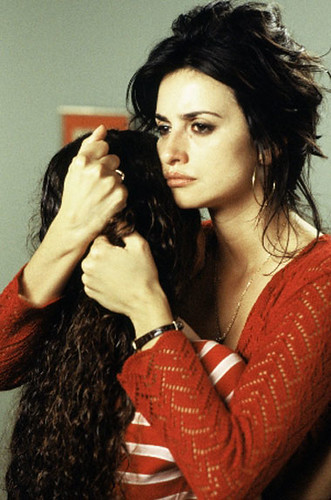
What did you think of Penelope Cruz as the heroine? I didn't mind her, but I think she lacked that real spark that was so fantastic in Pepa in "Women on the Verge." And I think Carmen Maura stole all her scenes in "Volver," too. I adored her hiding under the bed and laughing about farts.

Funny

"Volver" was categorized as a comedy everywhere I looked, and it certainly had its amusing moments. But the inclusion of the rapist stepfather and incestuous grandfather gave me pause. I was not expecting that sort of thing, and I found it somewhat difficult to keep it from distracting from the rest of the movie. Your thoughts?

The wind

What was the significance of the east wind? And the wind turbines? KC made the comment that perhaps they were a Don Quixote reference. I've since read that "Volver" was set in La Mancha. Do you see any connection?

The sexes

"Volver" gives us an ensemble of females to root for and a couple of low-life males to despise (one unseen). What do you think Almodovar's thoughts are about men and women? This is only my second film of his, but I'm reminded somewhat of the women and men in "Women on the Verge," who didn't exactly make beautiful music together.

Wednesday, July 18, 2007

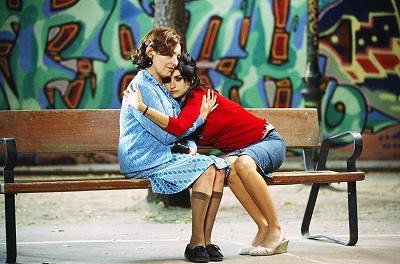
Erin's pick: "Volver"

Let's revisit Pedro Almodovar, shall we? This looks like an interesting storyline.

Tuesday, July 17, 2007

second opinions

Selected critic comments for "Sheila":

Since I'm told that (Stephen) Sondheim and (Anthony) Perkins are serious game people, I assume that the plot, if run backward, would make sense. More important to me was the generally festive air in which all this genteel mayhem takes place, as well as the rather charming, Agatha Christie manners that are observed. As plot points are explained, people get themselves drinks from the bar. If someone is murdered, the pall of gloom lasts for a maximum of five minutes. -- Vincent Canby, The New York Times

The movie was written by Stephen Sondheim and Anthony Perkins, and they exhibit a very fine eye for showbiz behavior and dialog. They've also played a sort of Jacqueline Susann guessing game for us; we can have fun wondering who the bitchy agent (Dyan Cannon) was inspired by, or the down-at-his luck director (James Mason), or the sexpot (Raquel Welch, who may very well have been inspired by herself). -- Roger Ebert

The Last Of Sheila's chief failing lies in its overemphasis on tricky construction, which gets in the way of its lightly bitchy '70s Hollywood exposé. The Sheila DVD release is invaluable because it adds a gossipy commentary track by Benjamin and Cannon, with drop-in comments by Welch (recorded separately). All were A-list actors when they starred in Sheila, and hearing them reminisce about socializing on the set in the south of France provides an open window onto the slick, professional side of '70s show business that Sondheim and Perkins are skewering. It's diverting as nostalgia and as middlebrow drama. -- Noel Howard, The A.V. Club

superfly!

Some fans tune into "Sheila" for its over-the-top costumes, designed by Joel Schumacher, who went on to direct a lot of bad movies, among them "Batman & Robin." (Would "The Incredible Shrinking Woman" be to his credit or discredit?) Anyway, while Dyan Cannon ran around in a few amusing frocks, like that multi-colored knit jacket she wore the first night of the game, I thought the men were far more fashion-forward. How about Clinton in his tight white jeans and blue-and-white-striped shirt? With the little scarf around his neck? Very natty. Anthony wore a series of curious shirts and open-collared vests.

And I began to suspect Tom was the murderer once he donned that expensive leather jacket. I don't know why. Something in that big, flared collar said "killer" to me.

Lee -- homely?

I can't find a good photo of Joan Hackett for this post.

Various descriptions of "The Last of Sheila" paint Joan Hackett as a Plain Jane (via Wikipedia, she is called a "homely wife"). I found that incomprehensible -- I thought she was the loveliest of the three women. She isn't a flashy beauty like Raquel Welch, but she had a certain class and breeding to her. As such it seemed improbable that Lee would tell Christine she was "trying to hold on to a husband" or that said husband wanted to murder her. Or that the other two women would slight her every chance they got.

Monday, July 16, 2007

Not exactly Poirot


James Mason's "Philip" is an unusual choice for the movie sleuth the audience cheers on to the finish. On the one hand, he seems the smartest and perhaps kindliest of the players. (Maybe I'm just a sucker for that accent.) But by process of elimination, the audience is left with the uncomfortable choice that Lee and Philip are the "hit-and-run killer" and "little child molester," respectively. Lee confesses to the car accident, and we never get back to Philip's card.

Later, Philip and Tom are unraveling the "SHEILA" mystery, and Philip denounces the "little" in "little child molester" card as a contrived way for Clinton to achieve the acronym he wanted. Was Philip just referring to how Clinton went about setting up the game, or was he saying he wasn't, in fact, a child molester, that Clinton had introduced a false clue?

Even if Philip was an innocent in the game, he still confessed to turning on the boat motor that nearly drowned Christine. (He apparently was after Clinton.) I thought that didn't make any sense, unless he had caught on to the nature of the game already AND knew someone had the child molester card. Or he was sick of Clinton's has-been remarks? In any case, whether our "detective" was a child molester or not, he still tried to commit murder. The game's survivors, Philip included, still get a morally murky getaway.

S-H-H-E-I-L-A

Did anyone else pull out a pen and paper to play "The Last of Sheila" game? I did on my first viewing (c'mon, I do the same with a revolving set of 72 Agatha Christie novels). Because I noted the cards displayed toward the beginning, I figured out pretty quickly that the clues would spell "SHEILA." But I wondered why there were two "H" cards (Homosexual, Hit-and-Run Killer) in addition to the "Alcoholic" card.

Still, I failed to solve the mystery, and when Tom trotted out his hypothesis and Lee confessed to the accident, I thought the movie was over. Instead, a whole new plotline developed. Did you find this to be a convincing or intriguing mystery? Did anything about it (Tom counting on Lee's cooperation in Clinton's death) seem contrived or far-fetched to you?

star power


"Sheila" had some big '70s names in its cast, but that didn't guarantee five-star acting. Raquel Welch CANNOT act, which I had always heard but never confirmed, and the worst scene had to be her breathy tell-me-your-clue close-up on board with her mystery lover (Tom). Compare with the magnificent James Coburn, who seemed to relish his Machiavellian role (puffing those big cigar rings). I have never before seen an actor who could emote with his teeth!

Thoughts on any standout performances? I was mixed on Dyan Cannon. I know her character was supposed to be annoying, but ...

A 7. Or an 8? Or a 7.

"The Last of Sheila" -- a great film, a bad film. We had a peculiar theme track followed by a hit Bette Midler tune, an excellent mystery, some terrible dialogue ("Tom, do you really think that there could be a homosexual on board the yacht?"), terrific plot twists, a running advertisement for Newports and the inexplicable presence of hand puppets. My kind of movie.

Ben mentioned that the film isn't listed on Film Affinity, so I'll give my rating here: a 7. No, an 8. No, a 7. Or it's a 7 with the great James Coburn, which probably makes it an 8.

What would you give it?

Thursday, July 05, 2007

what time can do

Alvin had a sense of serenity and wisdom to him that seemed to generate from his grasp of what time is about, what it is worth and has the power to accomplish. It's as though the elderly have seen and wrangled with enough of it to make peace with its reality. He can take several weeks to make an excruciatingly slow trip to see his brother -- their falling out has lasted 10 years, and he needn't rush over in a day's time to set things right. (I even like to think he was on a sort of quest or pilgrimage, paying some kind of slow penance to atone for his short temper at the time of their fight).

With the cyclists, he can acknowledge missing the vitality and mobility he took for granted in his youth, now that he's left to long days of remembering them.

Best of all, he knows that 10 years will wash away a bitter grudge between brothers. One of the best parts of all is that we never learn what exactly their disagreement was about; they both have a proper appreciation of the magnitude of that 10 years, and that it can sweep away all the bitterness and bad blood. All of the insignificant stuff they don't need to take with them.

Monday, July 02, 2007

Straight's Story

I have read a couple of reviews that have a different take on this film. The central issue is the story that Alvin tells the young pregnant girl about Rose's children. He says, "Someone else was supposed to be watchin' them, and there was a fire, and her second boy got burned real bad." One article argues that Alvin's vague references—"someone else" — and passive constructions — "there was a fire" and "got burned" — imply that he was the "someone else" who let Rose's children get hurt and then get taken from her.

The article says another clue is the burning house that appears in the background as Alvin flies down the hill. "This scene functions as a flashback to the earlier fire, the one in which Alvin's grandchildren were burned. Alvin's face, bathed in sweat and flickering orange with firelight, and his eyes, bulging and rolling in his head like a frightened animal's, express a terror that transcends his immediate situation. When intercut with those quick, jarring shots of the blazing house. The real object of that terror is unmistakable. Alvin is the unnamed 'someone' who was supposed to be watching Rose's kids. He let his grandson get burned. He caused his daughter's children to be taken away by the state. After he manages to stop his tractor, he sits panting and shaking in terror, staring at nothing, the burning house clearly framed in the background. He is trembling not just in reaction to his near-accident, but in an abreaction to that original trauma — another time when Alvin Straight lost control and events took on their own scary, unstoppable momentum."

It's a really long article, so I won't list all its points here, but it basically argues that everything on the journey, from the deer woman to the WWII vet, comes back to Alvin's role in the fire.

So, what do you think? Is this reading things into the story that just aren't there? Or is it a plausible reading?

A quirky mystery


My pick for July 16: "The Last of Sheila."

This odd whodunit is a lot of fun, especially for puzzle enthusiasts. When I saw it more than a year ago, I paused it shortly after starting so I could grab a pen and paper to play along as characters try to solve a murder mystery via process of elimination. (Not all of them survive the process.)

It's a little obscure, even for cult status, but Netflix does carry it. It has the greatness of James Coburn, the vapidity of Raquel Welch, terrific and terrible dialogue, a lot of that '70s campy nuttiness and a top-notch, twisty plot.

Harvest

And what was the importance of all of the harvest shots?

Subtlety

What did Alvin’s subtle reactions to his journey add to the story? For example, when several semis passed Alvin and he turned his head and smiled, what did that mean? Did it set up an expectation that something important was about to happen? Did you ever think that there would be an encounter in a scene and then it just cut to the next scene?

Richard Farnsworth

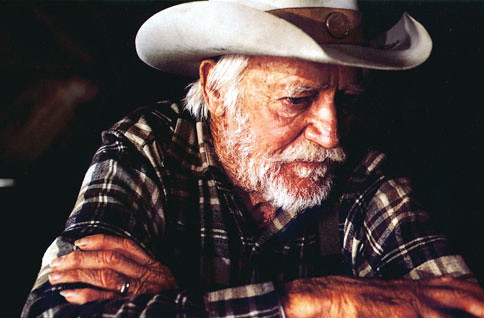
Richard Farnsworth in this role was the oldest person ever to be nominated for Best Actor. He was diagnosed with terminal cancer and killed himself with a shotgun just a year after this movie came out.

He had been a stunt man for 40 years before becoming an actor. He despised cursing, and he told Roger Ebert that the thing he was most proud of in his career was that he never had to say a bad word.

How much of his performance in this film do you think was acting, and how much of it was just Farnsworth being himself? Was Farnsworth perhaps a lot like Alvin Straight? What does Farnsworth’s death say about aging and how does that align with what Straight had to say about aging?

Encounters


What was your favorite of Alvin’s encounters?
Reaction

Did you like The Straight Story? If so, you are in large company -- the average rating on Film Affinity is an 8.0, and according to Rotten Tomatoes, 95% of critics gave it a positive review. The consensus review was “slow-paced but heart-warming.” Do you agree?